

Foaming Agent
Yancheng Zhongmai Rubber & Plastic Material Co., LTD., is a professional manufacturer for AC/NC foaming agent and WPC processing additives. The company is committed to research & development, production, sales as one. In 2017, the company newly developed ammonia-free blowing agent, it is widely used in WPC and leather industry, has been sold all over the country, exported to Turkey and other European and American countries,and wins a good reputation.

Why Choose Us?
01
High quality
Our main product is stabilizer, acrylic impact modifier agent, PVC processing aid, PVC foaming regulator, foaming agent, lubricant and other new tech chemical additives.
02
Rich experience
We are a professional manufacturer for AC/NC foaming agent and WPC processing additives with has more than 7 years of production work experience,
03
Advanced equipment
With the idea of intelligent production, scientific research and innovation, we introduce fully automatic environmental protection, efficient and energy-saving production lines.
04
Good service
We can provide production formula,free technology supporting for production,free sample,production cost budget, product customized OEM,and worker training service,etc.


What is Foaming Agent?
A foaming agent is a material such as a surfactant or a blowing agent that facilitates the formation of foam. A surfactant, when present in small amounts, reduces surface tension of a liquid (reduces the work needed to create the foam) or increases its colloidal stability by inhibiting coalescence of bubbles. A blowing agent is a gas that forms the gaseous part of the foam.
Benefits of Foaming Agent
Improved cycle times
Using less plastic by using foaming agents can also improve cycle times since there is less time needed to mold and dry out components. Operators can obtain cycle time reduction by 10-20%, which translates to significant savings.
Better structural stability
Products made with foaming agents have better structural stability. This makes it possible to remove sink marks and warpage.
Foaming agents are safe
Foaming agents create a safer byproduct through endothermics, which is considered much safer than exothermic reactions. Exothermics have hazardous and corrosive byproducts. This isn’t the case with endothermics.
More environmentally friendly
Using foaming agents is more environmentally friendly because it’s easier to recycle and uses less plastic than traditional manufacturing processes. Additionally, foaming agents can help reduce resin use.
Chemical blowing agents
Chemical blowing agents, also known as foaming agents. It is a chemical reaction that generates gas. The generation of gas leads to the formation of foam cells within the PVC matrix. These agents are typically added to the PVC compound during the extrusion or moulding process. As the temperature rises, the chemical blowing agent decomposes and releases gases that cause the PVC to expand and form a cellular structure.
Azodicarbonamide (ADCL)
Azodicarbonamide is a widely utilized chemical blowing agent renowned for its efficiency and versatility. Upon heating, ADCL releases nitrogen gas and facilitates the controlled expansion of the PVC compound. This agent finds extensive applications in various industries, including construction, automotive, and packaging.
Sodium bicarbonate
Sodium bicarbonate, a common household ingredient, serves as an effective chemical blowing agent when combined with an acid source. The reaction between sodium bicarbonate and the acid source generates carbon dioxide gas. It creates a foaming effect within the PVC material. This agent is often preferred for its cost-effectiveness and availability.
Organic acid salts
Organic acid salts, such as citric acid salts or oxalic acid salts, are another category of chemical blowing agents used in PVC foam production. These agents release carbon dioxide gas when heated, contributing to the formation of a uniform cell structure within the PVC foam.
Physical blowing agents
In contrast to chemical blowing agents, physical blowing agents rely on the direct incorporation of gases into the PVC compound during the extrusion or moulding process. These agents remain inert throughout the manufacturing process and ensure a consistent and controlled foaming action.
Hydrocarbons
Hydrocarbons, such as butane, isobutane, and pentane, are commonly employed as physical blowing agents in PVC foam production. These gases are injected into the molten PVC compound, where they create a foaming effect as the pressure is released during the extrusion or moulding process.
Carbon dioxide
Carbon dioxide (CO2) is a popular physical blowing agent due to its non-flammable and environmentally friendly nature. It is introduced into the PVC compound under high pressure, allowing for the formation of a uniform foam structure upon depressurization.
Nitrogen
Nitrogen gas is another physical blowing agent widely used in the PVC foam industry. Its inert properties make it a safe and reliable choice for creating lightweight and insulating PVC foam products.

Door and window installation: Sealing, fixing, and bonding between doors and windows and the adjacent walls.
Advertising models: Ideal for model making, creating sand tables, and repairing exhibition boards.
Sound insulation and noise reduction: Used to fill gaps during room decoration, reducing sound transmission.
Gardening and landscaping: Perfect for flower arrangements and landscaping, enhancing aesthetics.
Daily maintenance: Ideal for repairing cavities, gaps, wall tiles, floor tiles, and flooring.
Waterproof plugging: Effective in repairing and sealing leaks in water pipes and sewers.
Packaging and transportation: Convenient for packaging valuable and fragile items, offering protection against shocks and pressure.
Key Factors that Affect the Foaming Process
The foaming process is affected by several important factors that determine the outcome of the process and what the final product will be. These factors include:
● Temperature
● The ratio of the foaming agent to the plastic
● How well the machine mixes the two materials
● The size of the foaming agent’s particles in relation to the plastic molecules
● The melting temperature of the plastic
● How fast the foaming agent breaks down under different conditions

Natural Food Foaming Agent Market Analysis and Latest Trends
Natural food foaming agents are substances used to create foam or bubbles in various food products. They are typically added to foods to enhance their texture, mouthfeel, and presentation. These agents are derived from natural sources and are preferred over synthetic foaming agents due to their perceived health benefits and consumer demand for natural and clean label ingredients.
Market analysis:
The natural food foaming agent market is expected to grow at a significant rate during the forecast period. The increasing consumer demand for healthier and natural food ingredients is a key driver for the market growth. Consumers are becoming more conscious about the ingredients used in their food and are seeking products with minimal artificial additives.
The market is also driven by the growing popularity of plant-based food products. With the rise in vegan and vegetarian diets, there is a need for natural foaming agents to replace animal-derived ingredients. Additionally, the clean-label trend has also contributed to the growth of the natural food foaming agent market, as consumers prefer products with easily recognizable natural ingredients.
Latest trends:
One of the emerging trends in the natural food foaming agent market is the use of plant-based proteins as foam stabilizers. Proteins derived from soy, peas, and other legumes are being used to create stable foams in various food applications, including plant-based dairy alternatives and desserts.
Another trend is the use of natural emulsifiers as foaming agents. Emulsifiers like lecithin, derived from sources like soybeans, are used to stabilize foams and create a smooth texture in products such as mousses and whipped toppings.
Furthermore, manufacturers are focusing on product innovations and research and development activities to introduce new and improved natural foaming agents. They are also investing in sustainable and eco-friendly production methods, aligning with the growing consumer demand for environmentally friendly products.
The Role of Foaming Agent in The Flotation Process
1. The foaming agent molecules prevent the merger of bubbles.
Various foaming agent molecules have the effect of preventing the merger of bubbles. The order from strong to weak is polyethylene glycol ether > Triethoxybutane > octanol > C6-Ca mixed alcohol > cyclohexanol > cresol.
2. The foaming agent reduces the speed of the upward movement of the bubbles.
The test shows that the bubble rising rate becomes slower after adding the foaming agent. The effect of the flotation agent on the rising speed of bubbles: But xanthate is 100%, then the relative percentage of bubble rising rate of other foaming agents is:
● Phenol 93.4%
● Cresol 90.8%
● VPine oil 88.3%
● VCyclohexanol 88.2%
● Dimethylphthalic acid 80.7%
● Heptanol 76.8%
● Octanol 75.8%
● Ethanol 76.2%
● Tetrapropylene glycol methyl ether 72.9%
● Triethoxybutane 72.3%
A possible reason why the blowing agent slows the rise of the bubbles is that the blowing agent molecules form an “armor layer” on the surface of the bubbles. This layer is attractive to the water dipole, and at the same time, the double-as-water film is easy to deform with the resistance, thus blocking the upward movement.
3. The foaming agent affects the size and dispersion state of the bubbles.
The size and composition of the bubble particle size directly impact the flotation index. Generally, the average diameter of the bubbles generated in the pure water by the mechanical stirring flotation machine is 4-5mm. After adding the foaming agent, reduced the average diameter to 0.8-1 mm. The smaller the bubbles, the larger the flotation interface, which is conducive to the adhesion of ore particles. However, for the bubbles to float up with the ore particles, they must have sufficient buoyancy and an appropriate floating speed. Therefore, it is not that the smaller the bubbles, the better, but the proper size and particle size distribution.
4. Interaction between foaming agent and collector.
In the flotation process, the interaction between the frother and the collector is of great significance to the flotation. Some foaming agents have
How to Choose Between Different Foaming Agents?
Choosing the right agent for a particular application depends on several factors, including the type of material being foamed, processing conditions, desired foam properties, and specifc performance requirements. Here are some key considerations to help in selecting the appropriate foaming agent:

Type of material
Different foaming agents are suitable for different materials, such as plastics, rubber, concrete, or food products.Consider the compatibility of the foaming agent with the base material and its processing characteristics.
Foam properties
Determine the desired properties of the foam, such as density, cell structure (open-cell or closed-cell),mechanical strength, thermal insulation, acoustic insulation, and surface finish. Select a agent that can produce foams with the required properties.
Foaming process
Consider the processing method used to foam the material, such as extrusion, injection molding, blow molding, or casting. Choose a foaming agent that is compatible with the processing conditions and can be easily incorporated into the
manufacturing process.
Foaming mechanism
Decide whether a chemical foaming agent or a physical foaming agent is more suitable for the application.Chemical foaming agents release gas through a chemical reaction, while physical foaming agents introduce gas through mechanical means. Evaluate the advantages and limitations of each foaming mechanism.
Temperature and pressure conditions
Take into account the temperature and pressure conditions during processing, as these factors can affect the decomposition or activation of the foaming agent. Ensure that the foaming agent is stable and effective within the operating temperature and pressure range.
Regulatory compliance
Consider any regulatory requirements or industry standards that may apply to the foaming agent, especially if the final product will be used in sensitive applications such as food packaging, medical devices, or construction materials.Choose foaming agents that comply with relevant regulations and safety standards.
Cost and availability
Evaluate the cost-effectiveness and availability of the foaming agent, considering factors such as price, supply chain reliability, and availability of technical support or expertise from the product supplier.
Trial and testing
Conduct trials and testing to assess the performance ofdifferent ones in the specific application. Compare foam quality, properties, and processability to determine the most suitable one for the intended purpose.

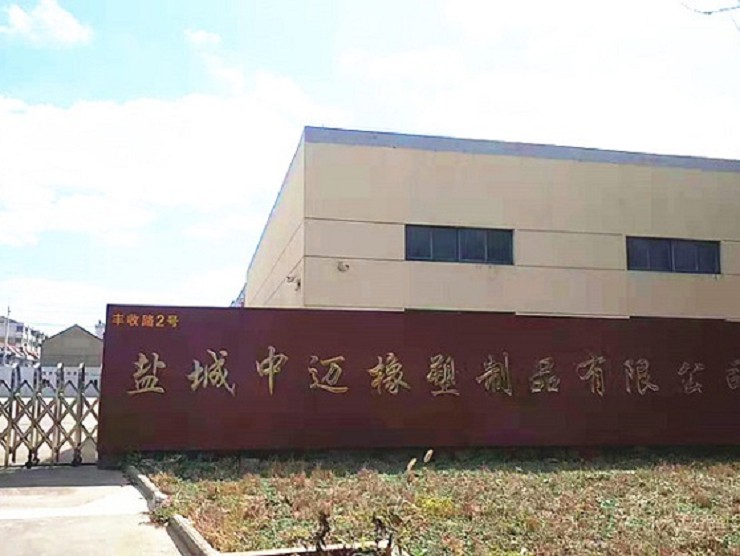
Our Factory
Yancheng Zhongmai Rubber & Plastic Material Co., LTD., is a professional manufacturer for AC/NC foaming agent and WPC processing additives. The company is committed to research & development, production, sales as one.


Our Certificate


FAQ
As one of the leading foaming agent suppliers in China, we warmly welcome you to buy high quality foaming agent at competitive price from our factory. For free sample, contact us now.