

Foaming Regulator
Yancheng Zhongmai Rubber & Plastic Material Co., LTD., is a professional manufacturer for AC/NC foaming agent and WPC processing additives. The company is committed to research & development, production, sales as one. In 2017, the company newly developed ammonia-free blowing agent, it is widely used in WPC and leather industry, has been sold all over the country, exported to Turkey and other European and American countries,and wins a good reputation.

Why Choose Us?
01
High quality
Our main product is stabilizer, acrylic impact modifier agent, PVC processing aid, PVC foaming regulator, foaming agent, lubricant and other new tech chemical additives.
02
Rich experience
We are a professional manufacturer for AC/NC foaming agent and WPC processing additives with has more than 7 years of production work experience,
03
Advanced equipment
With the idea of intelligent production, scientific research and innovation, we introduce fully automatic environmental protection, efficient and energy-saving production lines.
04
Good service
We can provide production formula,free technology supporting for production,free sample,production cost budget, product customized OEM,and worker training service,etc.


What is Foaming Regulator?
PVC foaming regulator is one kind of processing aid applied in PVC foaming sheet, besides with plastification function for PVC compound, more important is with super higher molecular weight and melt strength which can endow PVC foaming products with more uniform cell structure and much lower density.

Promote PVC melting, improve surface finish, improve the elasticity of the melt, and enhance the elongation and strength of the melt.
Helps to cover bubbles and prevent them from collapsing.
The molecular weight and dosage of the foaming regulator have a great influence on the density of the foamed sheet: as the molecular weight increases, the melt strength of PVC increases, and the density of the foamed sheet can be made lower, which is related to increasing the regulator. dosage has the same effect.
Improve melt strength and surface gloss.
Improve the thermal elongation and elasticity of PVC products.
Application of Foaming Regulator
The additive can be applied to PVC foam products, such as thin and thick foam board, WPC floor, foam shoes and foam decoration materials etc., also can be applied to PVC profile, pipes, sheet and so on.
The Principle Of PVC Foaming Regulator
First of all, it is necessary to know that the ductility of the PVC body is not good, the products produced are easy to break, and the melt of PVC is relatively loose, resulting in a rough and dull surface of the produced products. Therefore, in order to improve these shortcomings of PVC products, it is necessary to use PVC Some auxiliaries are added in the process of product production to change these shortcomings. For the PVC foaming regulator, its role as an auxiliary has three aspects: promoting the melting of PVC, improving the rheological properties of the melt, and making PVC have lubricating properties.
The first is to promote melting. When the PVC resin is heated, the PVC foaming regulator first melts and sticks to the surface of the resin, which can increase the viscosity and friction of the PVC, which can transfer more shear force and heat and accelerate the melting of the PVC raw materials.
The second is to improve the rheological properties. The PVC foaming regulator can improve the poor strength, ductility and melt fracture fluidity of the PVC melt. Effectively increase the viscoelasticity of PVC melt, thus improving die swell and melt strength.
The third is to make the PVC raw materials have lubricating properties, and the PVC foaming regulator and PVC are melted in advance, which effectively improves the release properties of PVC products.
How to Choose PVC Foaming Regulator?
Foaming properties: Make sure the regulator you choose has the right type of foaming effect for your application.Different regulators offer different degrees of foaming.
Temperature range: Make sure that the regulator you choose operates within the correct temperature range for your process.
Effective dosing: Make sure that the regulator you choose allows for effective dosing and accurate metering to maintain the correct foaming properties. This is especially important for smaller parts and complex profiles.
Compatibility: Make sure the regulator you choose is compatible with the other components in the extrusion process to ensure that the foaming is consistent and of the highest quality.
Cost: Make sure to evaluate the cost of each regulator. since some may have a higher upfront cost but may save you money in the long run.

Common Problems of PVC Foaming Regulator
PVC foaming regulator is actually an acrylate processing aid. It has all the basic characteristics of PVC processing aids. The only difference from PVC general processing aids is the molecular weight. The molecular weight of PVC foaming regulators is much higher than General purpose processing aids.
In the process of PVC foam sheet extrusion, the problems encountered can basically be classified into 4 categories, one is stability problem; the other is melt strength problem; third is lubrication problem; fourth is dispersion problem. These four types of problems, especially the first three types of problems, will restrict each other and have cross-effects. From the surface, it is sometimes difficult to distinguish them immediately. It is necessary to observe and analyze them to find the root of the problem to solve the problem.
Insufficient stability will affect the entire board surface, the board surface will turn yellow, and the foam sheet will be brittle.
Insufficient melt strength will cause the foamed sheet to have large cells and long vertical sections. The most direct way to judge whether the melt strength is insufficient is to press the sheet wrapped on the middle roll with your fingers behind the three rolls. When the melt strength is good, you can feel elasticity when pressed. If it is difficult to bounce up after pressing, it indicates that the melt strength is poor. Because the screw structure and cooling method are quite different, it is difficult to judge whether the temperature is reasonable or not. Generally speaking, within the allowable load of the extruder, the temperature in zone 3 to 5 is better.
Poor dispersion will cause the surface of the board to be uneven.
Process temperature control issues: The four issues mentioned above are fundamental issues, foundations, and deep-seated issues. Compared with the above four problems, the process temperature control is much more intuitive. It is a superficial problem, but poor temperature control can induce fundamental problems. Increasing the processing temperature will reduce the material stabilization time and cause stability problems; the original lubrication balance will be broken, which is generally manifested as insufficient external lubrication, especially in the later external lubrication, the amount of external lubrication needs to be increased; increased temperature will also cause The melt strength decreases, the foamed sheet cells increase, the number of cells decreases, and the sheet becomes brittle and easy to break; the increase in temperature reduces the melt strength and also reduces the melt viscosity, and the viscosity decreases. For a screw with a weak capacity, uneven dispersion sometimes occurs.
Key Points of PVC Foaming Process Control
Plastic foam molding can be divided into three processes: the formation of bubble core, the expansion of bubble core and the curing of foam body. For the PVC foamed sheet with chemical foaming agent, the expansion of the bubble core has a decisive effect on the quality of the foamed sheet. PVC is a straight chain molecule with short molecular chain and low melt strength. In the process of bubble core expansion into bubbles, the melt is not enough to cover the bubbles, and the gas is easy to overflow and merge into large bubbles, reducing the product quality of the foamed sheet.
The key factor to improve the quality of PVC foamed sheet is to improve the melt strength of PVC. From the analysis of processing characteristics of polymer materials, there are many methods to improve the strength of PVC melt, but the most effective way is to add additives to improve the melt strength and reduce the processing temperature. PVC is an amorphous material. The melt strength decreases with the increase of the melt temperature. On the contrary, the melt strength increases with the decrease of the melt temperature, but the cooling effect is limited and only plays an auxiliary role. ACR processing agents have the effect of improving melt strength, and foaming regulator is the most effective. The melt strength increases with the increase of foaming modifier content. Generally speaking, as long as the screw has enough dispersing and mixing ability, the effect of adding high viscosity foaming regulator on improving the melt strength is more obvious.
How Can Foam Regulators Enhance the Quality of Foam Products?
1. Uniform cell structure
Consistent cell size: PVC foaming regulators help achieve a uniform cell size and distribution throughout the foam. This uniformity is crucial for the mechanical properties, appearance, and performance of the final product.
Cell stability: PVC foaming regulators enhance the stability of the foam cells, preventing them from collapsing or merging during and after the foaming process. This results in a more consistent and reliable product.
2. Density control
Targeted density: PVC foaming regulators allow manufacturers to precisely control the density of the foam. This is important for meeting specific application requirements, whether for lightweight or more robust, higher-density products.
Consistent density: PVC foaming regulators ensure that the density of the foam remains consistent throughout the product, which is essential for both performance and cost-efficiency.
For rigid PVC single and twin screw extrusion, softening point is about 100-117℃, white powder, the dosage is usually 0.1-0.5 parts. Because polyethylene wax has a large relative molecular mass, low volatility, and high melting point, the lubricating effect can be obvious even at the high shear rate and temperature;
PVC foaming regulator, without gradation group, melting point 57-63℃. Due to the low melt viscosity, easy evaporation, and low melting point of paraffin wax, it is only suitable for lubrication in a narrow range such as extrusion by single and twin screw extruders. This product is easy to whiten and has poor transparency. The dosage is usually 0.1-0.8 share;
The melting point is 70-71 ℃, and it is yellowish or white particles. It has a better preventive effect on chromatographic scaling. The dosage is usually 0.2-0.5 parts. If the dosage is too large, it is easy to cause frost.
Oxidized polyethylene wax can improve the dispersibility of colorants, and can also improve extrusion efficiency and lubricity between metal and polymer. PVC foaming regulator has high lubricating efficiency, showing pale yellow or white color. In granules or powder, the dosage is usually 0.1-0.5 parts;
The PVC foaming regulator product has no vulcanization pollution, has excellent processing and lubricity, the melting point is 148-155 ℃, and the dosage is usually 0.1-0.4 parts. It belongs to a kind of white powder. When used together with basic lead soap and basic lead salt, it can improve the gelation speed.
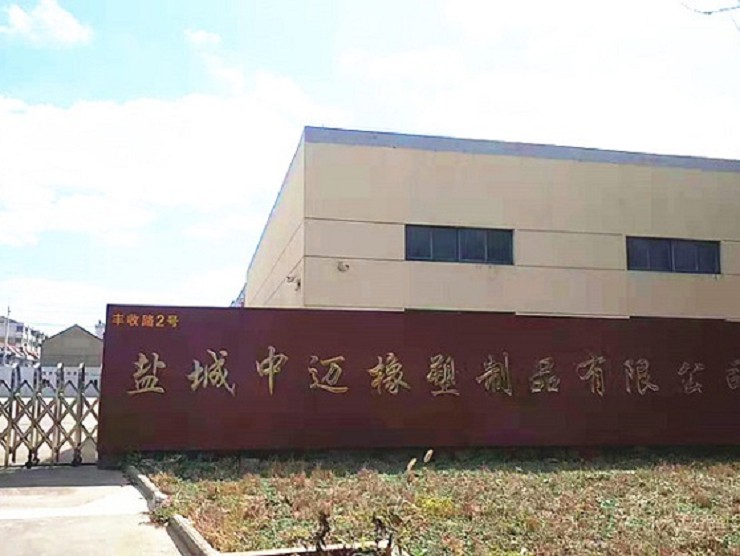
Our Factory
Yancheng Zhongmai Rubber & Plastic Material Co., LTD., is a professional manufacturer for AC/NC foaming agent and WPC processing additives. The company is committed to research & development, production, sales as one.


Our Certificate


FAQ
As one of the leading foaming regulator suppliers in China, we warmly welcome you to buy high quality foaming regulator at competitive price from our factory. For free sample, contact us now.
pvc toughening aid, pvc glass fiber, pvc rubber surfactant