

Internal Lubricant
Yancheng Zhongmai Rubber & Plastic Material Co., LTD., is a professional manufacturer for AC/NC foaming agent and WPC processing additives. The company is committed to research & development, production, sales as one. In 2017, the company newly developed ammonia-free blowing agent, it is widely used in WPC and leather industry, has been sold all over the country, exported to Turkey and other European and American countries,and wins a good reputation.

Why Choose Us?
01
High quality
Our main product is stabilizer, acrylic impact modifier agent, PVC processing aid, PVC foaming regulator, foaming agent, lubricant and other new tech chemical additives.
02
Rich experience
We are a professional manufacturer for AC/NC foaming agent and WPC processing additives with has more than 7 years of production work experience,
03
Advanced equipment
With the idea of intelligent production, scientific research and innovation, we introduce fully automatic environmental protection, efficient and energy-saving production lines.
04
Good service
We can provide production formula,free technology supporting for production,free sample,production cost budget, product customized OEM,and worker training service,etc.


What is Internal Lubricant?
Internal lubricants reduce the friction between PVC particles and processing equipment, such as extruders and injection moulding machines. This lubrication is essential to prevent PVC from sticking to metal surfaces and causing processing difficulties.
Benefits of Internal Lubricant
Reducing friction
Internal lubricants reduce the friction between PVC particles and processing equipment, such as extruders and injection moulding machines. This lubrication is essential to prevent PVC from sticking to metal surfaces and causing processing difficulties.
Enhancing flowability
These lubricants improve the flowability of PVC melt, making it easier to process. This is particularly crucial in applications like extrusion, where a smooth and uniform flow of PVC is essential for quality end products.
Minimizing shear heat
The friction generated during PVC processing can lead to excessive shear heat, which may degrade the polymer. Internal lubricants help reduce shear heat, preventing polymer breakdown and maintaining product integrity.
Controlling fusion time
In applications involving multiple layers or co-extrusion, internal lubricants can be tailored to control fusion times. This ensures proper bonding between PVC layers or with other materials.

Oxidized PE wax
The chain ends of the low molecular weight PE waxes are oxidized to acid groups under controlled conditions and are called oxidized polythene waxes. This improves the solubility parameter of PE wax. OPE wax is multifunctional, it acts as both internal as well as external lubricant. It is useful in filler treatment and dispersion of colorants in PVC processing and masterbatches. It gives the product good transparency and gloss. The general dosage for OPE wax is 0.1-1.0 PHR.
Ester wax
Ester waxes are multifunctional, i.e. these are lubricating and moderately co-stabilizing. Being of the same family, these are highly compatible with plasticizers and resist fogging in transparent applications. The increase in the chain length of esters may increase the fusion time. Fatty acid diesters are excellent internal lubricants, promote flow, and resist plate out. Penta-erythritol based esters are particularly used for high-speed extrusions, in wires and cables for improving output and providing a smooth surface without bloom.
Application Of Internal Lubricant
Internal lubricants used for PVC processing reduce mutual attraction between the PVC’s molecular chains and promote the flow between the molecule via chain slippage. They are also known as processing aids or melt flow enhancers.
In PVC processing, when the melt is injected in a mold under high pressure, melt fracture can be easily caused, leaving burn marks on the product surface. Using the correct PVC lubrication in the proper quantity reduces the likelihood of burn marks on the final product.
During the injection molding of polymers, the most common defect is the formation of small depressions. While these depressions do not affect any physical features of the PVC, they can compromise the aesthetic appeal of the final product. Proper use of lubricants can reduce the chance of small depression formations and enhance the product’s surface finish.
Ester Lubricants, Oleochemical Derivatives and N-Butyl Stearate are commonly used Internal Lubricants for PVC applications.

How to Maintain Internal Lubricant
Synthetic lubricants should be stored in a clean, dry room maintained at an ambient room temperature of between 50° and 85°Farenheit or 10° and 30°Celcius.
Lubricants should not be stored outdoors. However, if they must be stored outdoors (short periods only) they should be stored horizontally so that water cannot collect on the drums. Drums should be positioned several inches about the ground to prevent moisture damage and protected with a waterproof cover.
Containers should be stored so that the product name/labelling is clearly visible to minimize the risk of using the incorrect lubricant.
Before opening a lubricant drum, the head should be inspected for contamination (e.g dirt) and cleaned if required.
Heads, openings and spouts of all lubricant drums, pails and containers should be kept closed at all times to prevent contamination with atmospheric dust, moisture and other impurities.
When lubricants are transferred from drums care should be taken that the dispensing equipment and transporting containers are free from contamination, such as other liquids and dirt.
The use of PVC pipe lubricant in the processing of PVC requires certain principles to be followed strictly. There should be a proper slip balance between internal and external lubrication, and the lubricants should be used in adequate amounts. If this is not the case, then the following things can happen.
Unbalanced external and internal lubrication
Over and under lubrication affect the product quality as the processing suffers. Too much internal slippage results in large extrusion volumes and poor material plasticization. If the external slippage is too much, extrusion speed becomes fast, but plasticization is poor. It affects the internal performance and surface quality of the extruded product.
Over lubrication leads to poor surface properties along with scorching, poor weld lines, poor impact strength, and low output. On the other hand, under lubrication causes loss of mechanical properties and poor fusion or degradation of PVC due to frictional heat.
The addition of PVC lubricants in excess amounts can influence the blending system of
PVC adversely because of the incompatibility of PVC resins and lubricants, which may result in product defects due to thermal stability issues and several other processing-related problems.
In the case of excessive internal lubricants, plasticizing torque gets smaller, and plasticizing time gets shorter. The thermal stability time is also less, and the product’s inner wall is not smooth. On the other hand, excessive external PVC lubricants may result in precipitation phenomena and decreased mechanical properties.
Evolution of Lubricants
The history of lubricants started thousands years ago, as early as in 2400 BC (and possibly earlier) an Egyptian statue to the grave of Tehuti-Hetep, El-Bersheh was transported with the aid of liquid (oil/water) lubricant in order to reduce friction between sledge and ground/sand. By 1400 BC Egyptians used animal fat to lubricate chariot axles. However, the solid theoretical understanding of the lubricant action was only possible with the development of the viscous flow laws discovered by Sir Isaac Newton in 1687. Based on the laws of viscous flow, Professor Osborne Reynolds developed the classical equation of thin film lubrication. This equation is the basis of the classical hydrodynamic lubrication theory and is the most widely used theory of lubrication.
Early in the 20th century, only mineral oils, vegetable oils or fats, and greases were mostly considered as lubricants. However lately solid lubricants, synthetic oils, water and gas based lubricants were included into the concept of a lubricant as well. The broadening of the concept has been accompanied by a greater understanding of the lubricant performance, and its limitations.
Prerequisites and Conditions for PVC Internal and External Lubricant Mutual Conversion

PVC lubricant is divided into two categories: internal lubricant and external lubricant, but there is no strict division standard. The main distinction is based on the compatibility of the lubricant to the resin.
The internal lubricant has a high affinity with the resin in the function of reducing the inter-molecular force and improving the dispersibility of the raw material components; while the external lubricant has a low affinity with the resin, and its function is to reduce the friction between the resin and the metal surface.
Due to the different polarity of the resin, there may some changes on the effects of the internal and external lubricants. Generally, the lubricants of extreme polarity such as stearic acid alcohol, stearic acid amide, butyl stearate and stearic acid monoglyceride are classified as internal lubricants, and those of less polarity such as paraffin, PE wax are listed as external lubricants. However, this classification is specific to the extremely polar PVC and PA resins. For non-polar resins such as PE and PP, the classification is just the opposite. For example, paraffin wax and PE wax belong to non-polar materials same with PE and PP, and therefore, have good compatibility with those resins. In this end, it is classified as a typical internal lubricant.
The compatibility of lubricants with the resins is not static but changeable with the processing temperature. For example, in the initial stage of PVC extrusion molding, due to the low melt temperature and poor compatibility with PVC resin, stearic acid and stearyl alcohol mainly perform as external lubricants; when the temperature rises, their compatibility with PVC increases, and the micro molecular lubricants are easier to enter between molecular chains and converse to internal lubricants.
The change of lubricant properties is also related to the volume of addition. When the amount is less than the compatibility degree, there is no precipitation outside the PVC secondary particles and the lubricant acts its inner lubricating effect; when the amount is more than the compatibility degree, a part of the lubricant is excluded outside of the PVC macro particles and secondary particles, and therefore achieve external lubricating performance. Stearic acid is a widely used lubricant after metal soaps. It is a typical external lubricant in soft products, which can reduce the friction heat between the resin and the processing equipment, and also prevent the adhesion of the molten resin to the metal surface. But in PVC-U production, less amount achieves an internal lubrication effect, obviously promotes plasticization and reduce the melt viscosity; while large amount can delay the plasticization speed and play an external lubrication effect.

How to Use PVC Internal Lubricants
Emerging Trends in Lubricants in the Global Plastic Processing Market
The lubricants in the global plastic processing market's size has been expanding rapidly, driven by the increasing adoption of lubricants in plastic processing in various industries. The market size is influenced by factors such as of sustainable bio-based lubricants, advancement in formulation technology of lubricants, and development of specialized lubricants for various applications. The market size is estimated to continue its upward trajectory as industries across the globe seek to improve performance, efficiency, and sustainability.Emerging trends in lubricants in the global plastic processing market are shaping its future applications and market dynamics:
Sustainable bio-based lubricants
There is a developing need for eco-friendly lubricants. Producers are turning to bio-based and biodegradable lubricants produced from renewable sources more and more. This change helps in reducing the environmental impact and well-aligned with global sustainability objectives.
01
Specialized lubricants for various applications
The market has experienced rise in coming up with specialized lubricants which are specific to different types of plastics and methods of processing. This customization optimizes performance in injection molding, extrusion or blow molding applications.
02
Emphasis on non-toxicity and safety concerns over lubrication
Since health & safety regulations become tougher there is a rising focus on producing non-toxic lubricants that these products ensures safety of workers as well as compliance with regulatory standards particularly for food packaging and medical applications.
03
Digitization plus intelligent lubrication solutions
Digitalizing trend within the management of lubricating system is increasing day by day through which real time monitoring optimization towards use of lubricant via smart systems containing sensors analytics therefore assisting enhancing efficiencies minimization wastages.
04
Emerging markets and increased demand
Growing industrialization in EMs (Emerging markets) has resulted into increased demand for plastic-processing-lubricants during these investments into manufacturing capacities are being made; their effectiveness to enhance productivity qualify calls for effective lubes.
05
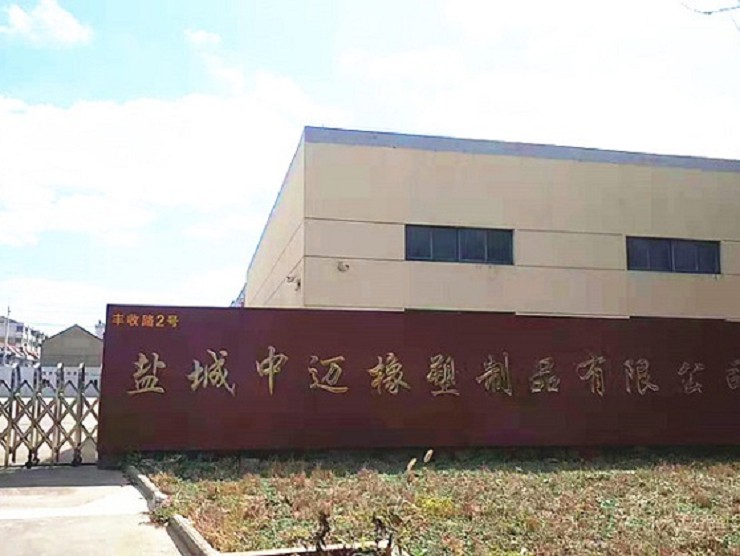
Our Factory
Yancheng Zhongmai Rubber & Plastic Material Co., LTD., is a professional manufacturer for AC/NC foaming agent and WPC processing additives. The company is committed to research & development, production, sales as one.


Our Certificate


FAQ
As one of the leading internal lubricant suppliers in China, we warmly welcome you to buy high quality internal lubricant at competitive price from our factory. For free sample, contact us now.
PVC Powder Lubricant for PVC Marble Sheet, food grade lubricant agent, packaged lubricant agent