

PVC Processing Aid
Yancheng Zhongmai Rubber & Plastic Material Co., LTD., is a professional manufacturer for AC/NC foaming agent and WPC processing additives. The company is committed to research & development, production, sales as one. In 2017, the company newly developed ammonia-free blowing agent, it is widely used in WPC and leather industry, has been sold all over the country, exported to Turkey and other European and American countries,and wins a good reputation.

Why Choose Us?
01
High quality
Our main product is stabilizer, acrylic impact modifier agent, PVC processing aid, PVC foaming regulator, foaming agent, lubricant and other new tech chemical additives.
02
Rich experience
We are a professional manufacturer for AC/NC foaming agent and WPC processing additives with has more than 7 years of production work experience,
03
Advanced equipment
With the idea of intelligent production, scientific research and innovation, we introduce fully automatic environmental protection, efficient and energy-saving production lines.
04
Good service
We can provide production formula,free technology supporting for production,free sample,production cost budget, product customized OEM,and worker training service,etc.


What is PVC Processing Aid?
PVC Processing Aids are acrylic-based polymers that, as their name suggests, help make PVC processing easier and more consistent.
Benefits of PVC Processing Aid
The melting temperature is lower than PVC, and the ACR processing aid is melted before PVC in the processing.
Because of its good compatibility with PVC, it can adhere to PVC particles after melting in the process, increase internal friction, increase shear torque, generate internal heat, make the temperature distribution in the material uniform, and the degree of plasticization is uniform. Promotes uniform plasticization of PVC materials.
The processing aid has a large enough molecular weight to increase the melt viscosity (or strength) during the processing, increase the melt pressure, prevent the material from slipping, thereby increasing the shear torque and making the melt and the metal. The frictional heat of the surface is greatly increased, which promotes the degree of mixing and plasticization of the PVC mixture.
PVC processing aid can help improve the quality of your PVC products.
PVC processing aid can help increase the efficiency of your production process.
PVC processing aid can help improve the appearance of your PVC products.
Types of PVC Processing Aid
Promote plasticizing processing aids
This type is widely used in hard PVC products. Its main function is to promote plasticization, improve melt rheological properties and improve the dispersibility of other additives, and improve the apparent quality of products.
Foaming regulator
PVC foaming regulator can greatly increase the melt strength of PVC material due to its high molecular weight, thus effectively encapsulating the foaming gas to form a uniform honeycomb structure and prevent gas from escaping. PVC foaming regulator is also beneficial to the dispersion of other additives including foaming agents, improving the surface quality of products and improving gloss.
External lubrication type processing aid
It has the same good metal stripping property as oxidized polyethylene wax. The difference is that it has good compatibility with PVC, and can also increase processing plasticizing performance and improve melt to a certain extent. Rheological properties, and the outlet expansion does not change during extrusion processing, does not change the thermoforming performance, and prevents the haze effect caused by the precipitation of the slip agent in the transparent article.

1. Building and construction
A: Pipes and fittings
Application: PVC Processing Aids are used in the extrusion of PVC pipes and fittings for plumbing, sewage, and irrigation systems.
Benefits: Improved flow properties, reduced processing temperatures, enhanced surface finish, and increased impact resistance.
B: Profiles and siding
Application: PVC Processing Aids are used in the production of window profiles, door frames, and exterior siding.
Benefits: Achieve smooth surfaces, consistent dimensions, and enhanced weather resistance.
C: Flooring
Application: Acrylic Processing Aid can be used in the production of PVC flooring materials, including tiles and sheets.
Benefits: Improved flexibility, enhanced surface finish, and increased durability.
2. Automotive
A: Interior and exterior parts
Application: PVC Processing Aids are used in the molding of automotive components such as dashboards, door panels, and trim.
Benefits: Improved surface finish, reduced processing defects, and enhanced mechanical properties.
B: Under-the-hood components
Application: PVC Processing Aids are used in the extrusion and molding of under-the-hood components like hoses and gaskets.
Benefits: Enhanced heat resistance, improved durability, and consistent performance.
How To Maintain PVC Processing Aid
PVC processing aids play a crucial role in modern pure resin processing, ensuring high efficiency and quality. Proper storage of these aids is essential to maintain their effectiveness. Here are some key points to consider:
Avoid premature unsealing: Do not open PVC processing aids if not immediately needed. Exposure to air can cause oxidation, leading to degradation.
Keep dry: Store in a dry environment. As PVC processing aids are in powder form, moisture can compromise their performance or render them unusable, increasing production costs.
Avoid liquid proximity: Do not store with liquids. Liquid evaporation can humidify the air and negatively impact the product's quality.
Additionally, store at normal temperatures, away from high heat sources like stoves or boilers to prevent performance alterations. Likewise, avoid extremely cold environments for similar reasons.

Fusion of PVC Is Promoted by Process Aids Through Two Mechanisms
1.By improving adhesion in the first step of fusion
S-PVC grain (secondary particle) of size 90-250 micron has a hard skin of 0.2 – 1.0 micron. This hard skin makes fusion very difficult. Unless this skin breaks, dispersion of secondary particle to primary particle and in turn fusion cannot take place effectively.
During extrusion, some degree of adhesion is necessary to facilitate shearing and convey the material along the flights of the screw.
In the initial stages of fusion, PVC tends to exhibit reduced adhesion to it and to metal surfaces.
This delays heating and breakdown of the grains.
Process aids do not have hard skin like PVC. Due to this reason, when heated under shear and stress, process aids soften earlier than PVC and then adhere to the surrounding PVC particles. Owing to good compatibility with PVC, they transmit elongational and shearing forces to PVC grains.
In this way process aids work as shear transfer agents, resulting in faster and uniform breakdown of PVC grains to primary particles (dispersion), leading to faster and uniform fusion.
Generally, lower the molecular weight of process aid, lower is the temperature of onset of fusion.
2.By providing longer chains to entangle with PVC chains in the second stage of fusion
Acrylic processing aids have very good compatibility with PVC because of their main component PMMA.
They also have higher molecular weight and longer chains than PVC.
Thus, when heated under shear stress during processing, entanglement appear between PVC chains and process aid chains resulting in viscoelastic network.
These entanglements work as cross links during processing and add rubbery characteristics to PVC compounds enabling increase in drawdown for extrudate or blow up ratio for blown films.
Process aid chains are elastic at processing temperature. Their action depends upon molecular weight or chain length and evaluated through die swell. Higher molecular weight process aids give higher die swell.
The Unseen Impact of PVC Processing Aids
They are key to making strong, lasting, and affordable PVC products. They make the manufacturing process smoother, cutting down on machine wear and halting production less often. By improving the look and toughness of PVC products, they directly increase customer happiness and help the products stand out in the market.
These aids also help the PVC industry become more eco-friendly. By allowing the use of lower heat during production, they decrease both power use and CO2 output. Plus, they enable more recycled materials to be used in making PVC, which supports a greener, more reusable economy.
PVC Processing Aids Market

The main function of PVC Processing Aids is to act as a fusion catalyst and promoter which has direct impact on melt elasticity. Controlling elasticity of melt is a very important characteristic which defines what process will be used to form PVC which can be done through extraction, injection moulding, dipping, calendaring and more.PVC processing aids are being used extensively in high melt elasticity requirement which is required for formation of rigid foam products.
These rigid foam are now replacing applications where thick wooden boards are used like brick moulding, trim moulding and construction.PVC Processing aids also improve appearance of the finished products and they also provide an option for coatings to be either clear or opaque depending upon amount of processing aid used which is an additional characteristic responsible for making PCV processing aids popular in paint and coating industry.
As PVC is used in both flexible and rigid application depending upon the need and properties required a subtle distinction can be made over the use of PVC processing aids depending upon flexibility required.
Whenever application demands good structural composition, strength, less flexibility and more rigidity processing aid used in resin compound increases and hence rigid PVC applications like pipes are major markets for PVC processing aids, however, a certain amount of processing aid is always added in small quantity even in flexible PVC applications to provide some amount of structural integrity. Hence even though PVC processing aids market is dominated by rigid compound processing it also find application in flexible resin compounds as well.
Morden day trends in PVC processing aids includes their use in inorganic and organic applications to provide improved weather resistance. Infrared reflecting paints developed for military applications excessively use PVC processing aids to allow dark exterior colour without high heat build-up.
The four major applications which dominate PVC processing aids are pipes, window sliding profiles, clear bottle sheets, injection moulding and pipe fitting. A lot of focus on providing variable molecular weights of processing aids to cater multiple applications can also be seen in the industry.

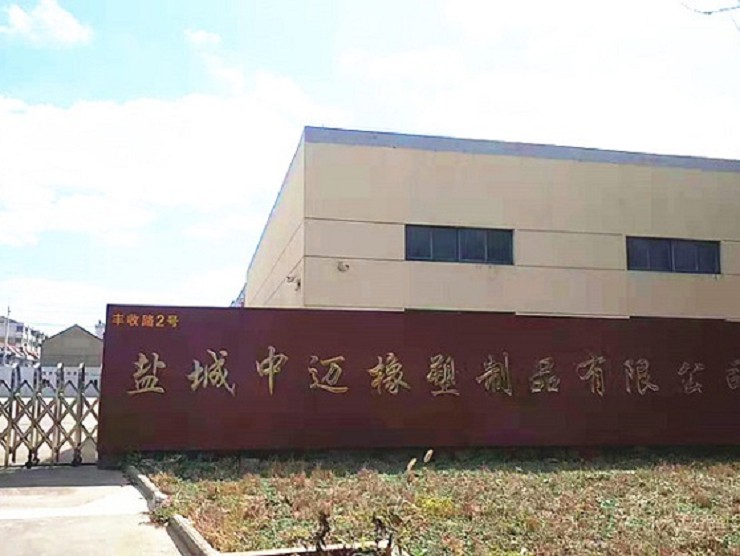
Our Factory
Yancheng Zhongmai Rubber & Plastic Material Co., LTD., is a professional manufacturer for AC/NC foaming agent and WPC processing additives. The company is committed to research & development, production, sales as one.


Our Certificate


FAQ
As one of the leading PVC processing aid suppliers in China, we warmly welcome you to buy high quality PVC processing aid at competitive price from our factory. For free sample, contact us now.
Once Pack Stabilizer, PVC Pb Stabilizer, Wall Board Blowing Agent