

AC Foaming Agent
Yancheng Zhongmai Rubber & Plastic Material Co., LTD., is a professional manufacturer for AC/NC foaming agent and WPC processing additives. The company is committed to research & development, production, sales as one. In 2017, the company newly developed ammonia-free blowing agent, it is widely used in WPC and leather industry, has been sold all over the country, exported to Turkey and other European and American countries,and wins a good reputation.

Why Choose Us?
01
High quality
Our main product is stabilizer, acrylic impact modifier agent, PVC processing aid, PVC foaming regulator, foaming agent, lubricant and other new tech chemical additives.
02
Rich experience
We are a professional manufacturer for AC/NC foaming agent and WPC processing additives with has more than 7 years of production work experience,
03
Advanced equipment
With the idea of intelligent production, scientific research and innovation, we introduce fully automatic environmental protection, efficient and energy-saving production lines.
04
Good service
We can provide production formula,free technology supporting for production,free sample,production cost budget, product customized OEM,and worker training service,etc.


What is AC Foaming Agent?
AC blowing agent chemical name is azodicarbonamide,it is light yellow crystal powder.Non-toxic, odorless, OF Gas evolution, easy dispersed in plastics and rubber, atmospheric foam. andpressure foam can be applied.
Benefits of AC Foaming Agent
Lightweight materials
AC foaming agents facilitate the production of foamed materials with reduced density, making them lighter in weight compared to solid materials. This characteristic is particularly beneficial in applications where weight reduction is desired, such as automotive components and packaging materials, as it can lead to improved fuel efficiency and reduced transportation costs.
Thermal insulation
Foamed materials produced with AC foaming agents exhibit excellent thermal insulation properties, making them suitable for applications where temperature control is important. These materials help to minimize heat transfer, providing insulation against both heat and cold. This property is advantageous in construction materials, refrigeration insulation, and thermal packaging.
Improved mechanical properties
Despite their reduced density, foamed materials produced with AC foaming agents can retain adequate mechanical properties such as strength, stiffness, and impact resistance. The cellular structure of the foam provides structural reinforcement, enhancing the material's mechanical performance. This makes them suitable for structural components and load-bearing applications.
Versatile applications
AC foaming agents can be used with a wide range of polymers, including polyethylene, polypropylene, polystyrene, PVC, and rubber. This versatility allows for the production of foamed materials tailored to specific application requirements across various industries, including automotive, construction, packaging, footwear, and consumer goods.

Foaming agent AC is the foaming agent with the largest gas generation, the most superior performance, and a wide range of uses. It is used in synthetic materials such as polyvinyl chloride, polyethylene, Polypropylene, polystyrene, polyamide, ABS, and rubber. Widely used for foaming in slippers, soles, insoles, plastic wallpapers, ceilings, floor leather, artificial leather, thermal insulation, sound insulation materials, and other materials. The foaming agent ADC has the characteristics of stable performance, non flammability, non pollution, non-toxic and odorless, non corrosion to molds, non staining of products, adjustable decomposition temperature, and no impact on curing and molding speed. The product can be foamed under normal pressure or pressure, both of which can achieve even foaming and ideal fine pore structure.
Process of AC Foaming Agent
The preparation method of an AC whipping agent is characterized in that it comprises the following steps:
Earlier be that to be mixed with concentration be 16-18% for 30% sodium hydroxide, with concentration, enter packing tower by water cooler by packing tower top, again chlorine is entered by the packing tower bottom, absorb by sodium hydroxide, control reaction temperature is less than 50 ℃, constantly measure pH value when pH value is 11-12, close the chlorine valve, make and contain 14-16%NaClO solution.
14-16%NaClO solution 1000kg is added 30% sodium hydroxide solution 500kg, be mixed with and contain 9-12% clorox and 10-12% sodium hydroxide solution in test tank I, again urea 500kg is made into 24% solution in test tank II, with the solution in two test tanks in the 3000L reaction kettle for reaction, temperature of reaction is 100-110 ℃, and it is about 5% saliferous base hydrated hydrazine that reactant is concentration;
Lower concentration contained saline and alkaline hydrazine hydrate carry out concentrating under reduced pressure distillation, temperature is 80-100 ℃, vacuum tightness is 750mmhg, collect distillate and get the salt-free base hydrated hydrazine of lower concentration, and residue is saline and alkaline;
Lower concentration hydration hydrazine is combined the salify hydrazine with acid, add the acid amount with till regulating pH value and being 5-6, be decompressed to 750mmHg again, in 80-100 ℃ of distillation concentrate the salt hydrazine, use 46% sodium hydroxide neutralized salt hydrazine again, the adjusting pH value is 10-11, underpressure distillation, and pressure is 750mmHg, temperature is 80-100 ℃, getting concentration is the high density hydration hydrazine of 40-80%, and the cycling utilization of wastewater in the leaching process is in preparation clorox and dissolved urea, and residue is a salt;
Earlier sulfuric acid being mixed with weight concentration is 20%, in high-order test tank, put into 225kg by high-order test tank, 80% hydrazine hydrate is put into 1800kg, 20% sulfuric acid, and constantly surveying pH value to pH value is 4-5, close the sulfuric acid valve, add 30% urea 1500kg reaction again, temperature of reaction is 100 ℃, is prepared into hydrazo-dicarbonamide.
Hydrazo-dicarbonamide 400kg and the water of step 4) preparation is made into suspension, feeding chlorine 250kg carries out oxidizing reaction, is prepared into the AC whipping agent.
How to Maintain AC Foaming Agent
Proper storage and handling of AC foaming agents are paramount to preserve their quality. Suppliers typically ensure that these agents are packaged in sealed containers to minimize exposure to air and moisture. It is recommended to store them in a dry and cool environment to extend their shelf life. Adherence to these storage guidelines is essential for maintaining the agent's effectiveness.

How to use Blowing Agent
The foam production process is almost the same as any ordinary plastic production process, usually through processes such as extrusion, rotational molding and injection molding, as well as plastic paste processing and thermoforming. For the same reason, basically any kind of plastic can be made into foam. Polyvinyl chloride (both rigid and soft), polystyrene, polypropylene, ABS and polyethylene are all made into foams on an industrial scale. The same goes for heat-resistant engineering plastics and thermoset polymers.
The blowing agent must be completely and evenly dispersed within the polymer, which is usually in a liquid or molten state. The blowing agent can form a true solution in the polymer at this time, or it can simply be evenly dispersed in the polymer to form a two-phase system.
After a large number of individual bubbles are formed, the system transforms into a system in which gas is dispersed in a liquid. At this time, a nucleating agent is often added to promote the formation of a large number of small bubbles. Nucleating agents are generally very fine inert particles that provide sites for the formation of new gas phases.
The initially formed cells continue to grow because more gas diffuses and penetrates the polymer into the cells. If this time is long enough, the individual cells will come into contact with each other. If the walls separating individual cells break, larger cells will form through this coalescence. If the foam is formed primarily by interconnected cells , it is called an open-cell foam. If the foam is formed by disconnected cells , it is called closed-cell foam. If cell coalescence is allowed to proceed unchecked, the foam will collapse because all the gas will automatically separate from the polymer.
When the viscosity of the polymer increases and the cells can no longer grow, the foam will stabilize. Polymer viscosity can be increased by cooling, cross-linking or other methods. From a time perspective, the last three stages of the foaming process can be as short as a fraction of a second, and the longest will not exceed a few seconds. For this purpose, the polymer can be dissolved or plasticized by heating.
AC Foaming Agent Market Size, Trends Evaluation

The ADC Foaming Agent Market focuses on a specialized category within the chemical industry, centering on the production and application of Azodicarbonamide (ADC) foaming agents. These agents are chemical compounds commonly used as blowing agents in the manufacturing of various polymers, plastics, and rubber products. The primary purpose of ADC foaming agents is to generate gas, typically nitrogen, during the processing of these materials, leading to the formation of a cellular structure within the final product. This cellular structure imparts desirable properties such as reduced density, improved insulation, and enhanced mechanical characteristics. The ADC Foaming Agent Market is integral to the polymer processing industry, contributing to the production of lightweight and versatile materials used in a diverse range of applications, including automotive components, construction materials, and packaging.
The growth of the ADC Foaming Agent Market is driven by several key factors. Firstly, the increasing demand for lightweight materials in industries such as automotive and construction propels market expansion. ADC foaming agents enable the production of lightweight foamed polymers, contributing to fuel efficiency in transportation and energy conservation in buildings. Secondly, the growing emphasis on sustainable and environmentally friendly manufacturing processes stimulates market growth. ADC foaming agents offer a viable solution for reducing material usage and enhancing energy efficiency during production. Additionally, advancements in polymer processing technologies and the continual research and development activities in the field of foaming agents contribute to market expansion, providing manufacturers with innovative solutions to meet diverse application requirements. Segmentation in the ADC Foaming Agent Market typically involves categorizations based on application industries, polymer types, and product grades, ensuring a targeted approach to address the specific foaming needs of various sectors and applications.

Impact of ADC on Physical and Mechanical Properties of Foam
Effect of ADC concentration on foam density
The density of the foam is directly affected by the concentration of ADC. Fine-tuning this concentration allows manufacturers to produce foams with specific density requirements, catering to diverse industrial needs.
Modifying foam structure and cell size with ADC
ADC provides a level of control over the foam structure and cell size. This flexibility enables manufacturers to tailor foams for different applications, optimizing characteristics such as strength, flexibility, and insulation properties.
Strength and thermal insulation properties of ADC based foams
ADC not only influences the physical properties of foams but also contributes to their strength and thermal insulation capabilities. Understanding these aspects is crucial for selecting the right foaming agent for specific applications.
Factors to Consider When Selecting a Blowing Agent
Chemical compatibility with resin:
The blowing agent must be compatible with the chosen resin to ensure proper interaction and prevent adverse effects on the final product’s properties. For instance, some blowing agents might react with specific resins. That leads to discoloration or degradation.
Desired physical properties of the finished product:
The desired characteristics of the final product significantly influence the choice of blowing agent. Consider:
● Density: Different blowing agents offer varying degrees of density reduction. If a lightweight product is desired, a blowing agent with a high gas yield would be suitable.
● Cell structure: The size and distribution of gas bubbles impact the product’s strength, surface finish, and insulation properties. Different blowing agents can generate fine, closed-cell structures or larger, open-cell structures.
● Surface finish: Certain blowing agents can influence the surface quality of the final product. Some might contribute to a smoother finish, while others might lead to a rougher texture.
Environmental impact and regulatory compliance:
Environmental regulations and sustainability considerations are increasingly important. Some blowing agents might have environmental concerns, such as ozone depletion potential or global warming potential. It is crucial to choose blowing agents that comply with relevant regulations and align with your company’s sustainability goals.
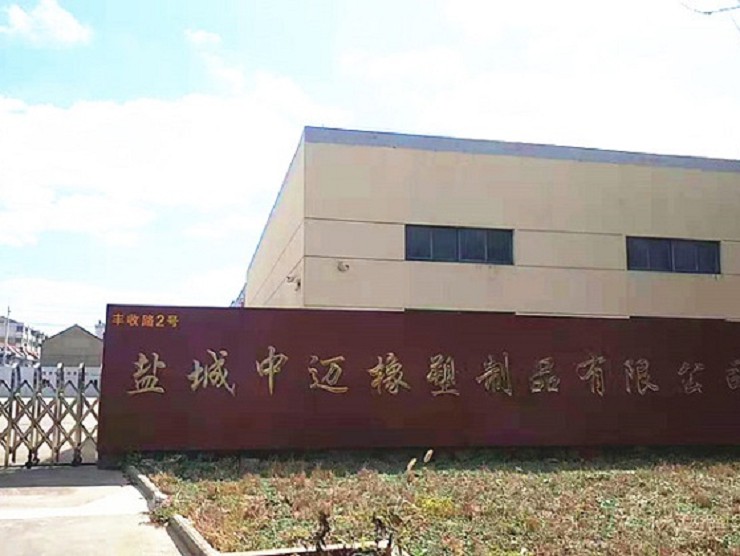
Our Factory
Yancheng Zhongmai Rubber & Plastic Material Co., LTD., is a professional manufacturer for AC/NC foaming agent and WPC processing additives. The company is committed to research & development, production, sales as one.


Our Certificate


FAQ
As one of the leading ac foaming agent suppliers in China, we warmly welcome you to buy high quality ac foaming agent at competitive price from our factory. For free sample, contact us now.
foaming agent for craft foam, foaming agent for amateur use foam, foaming agent for flexible foam