

External Lubricant
Yancheng Zhongmai Rubber & Plastic Material Co., LTD., is a professional manufacturer for AC/NC foaming agent and WPC processing additives. The company is committed to research & development, production, sales as one. In 2017, the company newly developed ammonia-free blowing agent, it is widely used in WPC and leather industry, has been sold all over the country, exported to Turkey and other European and American countries,and wins a good reputation.

Why Choose Us?
01
High quality
Our main product is stabilizer, acrylic impact modifier agent, PVC processing aid, PVC foaming regulator, foaming agent, lubricant and other new tech chemical additives.
02
Rich experience
We are a professional manufacturer for AC/NC foaming agent and WPC processing additives with has more than 7 years of production work experience,
03
Advanced equipment
With the idea of intelligent production, scientific research and innovation, we introduce fully automatic environmental protection, efficient and energy-saving production lines.
04
Good service
We can provide production formula,free technology supporting for production,free sample,production cost budget, product customized OEM,and worker training service,etc.


What is External Lubricant?
External Lubricant is responsible to reduce friction between PVC melt and the metal surface of machinery. It provides operational benefits of easier movement of the stock through the machinery and prevention of its adhesion to the hot metal that would quickly result in the local formation of stagnant layers and their burning. It increases the fusion time and stability of PVC and delays gelation. It also provides an additional feature of gloss to the end product.
Benefits of External Lubricant
The company conducted a competitive advantage analysis to identify its strengths and weaknesses compared to its rivals.
Improving surface finish
External lubricants enhance the surface finish of PVC products, giving them a smooth and glossy appearance. This is particularly important in applications where aesthetics matter, such as PVC pipes or profiles.
01
Enhancing mold release
In injection moulding, external lubricants act as mould release agents, preventing PVC from sticking to the mould cavity. This facilitates easy demolding and reduces production cycle times.
02
Controlling coating thickness
External lubricants can be customized to control the thickness of coatings in applications like PVC dip moulding. This ensures consistent and precise coating thickness.
03
Reduce friction
External PVC lubricants in industrial processing reduce the friction between the PVC resin and processing equipment. This ensures the PVC resin does not stick to the equipment, improving its flow through the equipment. As a result, the final PVC product has an even thickness and smoother finish. There are no random points where the resin has gathered due to poor flow.
04
Stop melt fracture
A melt fracture is a defect on the surface of the PVC product. This happens when the PVC resin accidentally sticks to something, resulting in a tear (very similar to what will happen if one thread of your shirt gets stuck in a hook and you pull). As already discussed, external lubricants form a lubricating interface, this interface ensures there is no sticking!
05
Types of External Lubricant
Paraffin wax
Paraffin wax is the most prevalent external lubricant used for U-PVC applications such as pipes and fittings. It is derived from petroleum refining and has a dropping point between 55-75°C. These long branched chain wax segments tend to form crystallites at the surface of U-PVC melt and form a layer between metal surface and matrix. This arrangement reduces the friction between the surface of the machine and the resin. It improves the surface gloss for rigid application but produces haze in the transparent application. Due to its low melting point, easy evaporation and low melt viscosity, it has a narrow application range. It is suitable for single-screw and twin-screw extruders. The general dosage for paraffin wax is 0.1-0.8 PHR.
Polyethylene wax
Polyethylene wax is the low molecular weight (ranging from 1000 to about 20000) polymeric chains of ethylene. These low molecular weight polymer waxes need to go under a separation process in which it is separated from water, residual catalysts and other contaminants, are then known as Synthetic Polyethylene Wax and Refined Polyethylene Wax. These are further arranged according to their molecular weight before packaging. A change in i) monomer purity; ii) degree and length of polymer branching; iii) monomer to polymer composition; will alter the physical characteristics of the polyethylene wax, such as viscosity, hardness, melting range, reactivity, etc.
The most used low density, low molecular weight polymeric chains of ethylene wax have dropping points between 85-115°C. They have characteristics of good colour & stability better than paraffin wax. They have excellent electrical properties and can also provide clean release from the conductor during stripping for termination. The resulting surface of the PVC-PE monolayer is more readily printed than the PVC surface with paraffin wax.
Fischer tropsch wax
Fischer Tropsch synthetic wax has a linear structure which gives high-temperature resistance, lower viscosity and softening points between 65-105°C. It increases the fusion time and stability of PVC while decreasing the fusion torque required for the processing of PVC. Its linear structure provides an excellent metal release effect and reducing the formation of hot spots resulting in thermal degradation, which further reduces scrap. Due to its low viscosity, the speed of production increases and also improves the gloss. As compared to PE and paraffin waxes, the dosage of FT wax required is less. This makes FT wax an excellent external lubricant for use during PVC processing.

External lubricants reduce the friction between the PVC melt and the metal surfaces of the processing equipment. They tend to exude to the surface of the PVC, forming a lubricating layer that helps in the release of the PVC product from the mold or processing machine.
Unlike Internal Lubricants, which deals with friction within the PVC melt, these lubricants deal with surface lubrication.
External Lubricants ensure a smooth processing experience, facilitate easy demolding, and prevent PVC from sticking to the machinery.
The additional feature of External Lubricants is that they make the end product glossier and helps increase its lifespan.
Polyethylene Wax and Amide based Wax are commonly used External Lubricants for PVC applications.
How To Maintain External Lubricant
Store lubricating oils and greases in a cool dry indoor area where airborne particles are at a minimum. Indoor storage also prevents label and container deterioration from exposure to weather. The ideal storage temperature range is from 32°F to 77°F.
If drums must be stored outside, use plastic covers or tip oil drums to direct water and contamination away from the bungs. Always store greases upright to prevent oil separation. Transformer and Refrigeration oils are highly sensitive to water and must not be stored outside.
● When necessary, bring grease to satisfactory dispensing temperature just prior to use.
● Rotate inventory. Check the container fill date and use the oldest container first.
● Keep containers tightly covered or closed to avoid contamination.
● Wipe off the tops and edges of containers before opening to avoid contamination.
● Use clean tools and equipment when pumping or handling lubricants and greases.

A mature lubrication system should, on the one hand, be conducive to reducing the viscosity of high-temperature polyvinyl chloride melts, improving the fluidity of materials, and reducing the friction between materials and equipment contact surfaces, facilitating the processing of pipe fittings and pipes; On the other hand, excessive lubricant should be avoided to cause delayed plasticization of materials and low plasticization degree.
The PVC resin powder, fillers, stabilizers, and lubricants used by PVC pipe fittings and pipe manufacturers vary greatly. In addition, due to differences in pipe specifications, as well as differences in extruder and extrusion die heads, appropriate adjustments in lubricants are required. The lubricant dosage should follow the following principles:
● For resin powder with a high degree of polymerization, the internal lubricant should be appropriately increased;
● When using composite stabilizers containing lubricating components, the lubricant should be appropriately reduced;
● The internal and external lubrication in the formula should be balanced to avoid processing difficulties:
● For resin powder with poor stability, if the fraction of stabilizer increases, the lubricant should be appropriately reduced;
● When adding more fillers, the lubricant should be appropriately increased;
● When the processing temperature is high, the polymer is easy to adhere to the processing equipment, and the lubricant should be appropriately increased;
● When using larger processing equipment, the surface of the polymer bond will increase, and the lubricant should increase;
● Excessive lubricant will reduce the degree of plasticization of materials and weaken the mechanical properties of pipes.
What Happens if You Improperly Use the Lubricants?
Lubricants are added to make processing simple. If PVC lubricants are used improperly, here are some of the difficulties you might face:
Recent Developments in Lubricants in the Global Plastic Processing Market
Recent developments in lubricants in the global plastic processing market which highlights ongoing innovations and advancements across different sectors:

Sustainability initiatives: In recent times, the lubricant industry has seen a swing towards sustainable alternatives such as bio based and biodegradable products. These eco-friendly lubricants aim at minimizing damage to the environment and aligning with worldwide objectives on sustainability.
Advanced formulations: Advancements in lubricant formulations have led to high-performance products designed for specific processing methods. Such developments have resulted in advanced lubricating oils that improve machine efficiency, reduce friction and enhance the quality of plastic materials.
Regulatory compliance: The latest trends indicate that there is greater emphasis on environmental and health compliance. They are developing non-hazardous but efficient industrial oils to conform them to legal requirements especially food industries and medical sectors require non-toxic certified grades.
Integration of digital technologies: Smart lubrication solutions are becoming more popular every day. Owing to this, digital technologies like IoT internet of things) and data analytics are being used in lube management systems for better usage optimization, performance monitoring, and less waste creation.
Customized lubricant solutions: There is a growing demand for tailored lubricants which are intended for particular plastics or processing technologies. Thus, they develop tailor-made items that can enhance operations for different applications ranging from injection molding up extrusion processes among others.
Emerging market growth: The rapid industrialization in emerging economies creates a need for high performing lubes for plastics industry operations. Accordingly, market expansion there necessitates solutions that will help raise productivity as well as product excellence.
Focus on non-toxic solutions: Increased concern over safety is driving the trend towards environmentally friendly lubricants free from hazardous substances A crucial step towards ensuring workers’ safety while adhering to regulatory frameworks involves shifting from toxic alternatives into harmless ones.

Storage Conditions Affecting All Lubricants
The storage environment greatly affects the estimated shelf life of lubricants and greases. Conditions which may affect oil lubricant shelf life are as follows:
Temperature
Both high heat (greater than 110°F) and extreme cold (less than 0°F) can affect lubricant stability. Heat will increase the rate of oil oxidation. Cold can result in wax and possible sediment formation. In addition, alternating exposure to heat and cold may result in breathing of drums and possible moisture contamination.
A temperature range of 0°F to 110°F is acceptable for storage of most lubricating oils and greases. Ideally, the storage temperature range should be from 32°F to 77°F.
Light
Light may impact color and appearance in lubricants. Lubricants should be kept in the original metal or plastic opaque containers they were packaged in.
Water
Water will react with some lubricant additives. It can also promote microbial growth at the oil/water interface. Lubricants should be stored in a dry location, preferably inside.
Particulate contamination
Lubricant drums and pails should not be stored in areas where there is a high level of airborne particles. This is especially important when a partially used container is
stored for later use.
Atmospheric contamination
Oxygen and carbon dioxide can react with lubricants and affect their viscosity and consistency. Keeping lubricant containers sealed until the product is needed is the best protection.
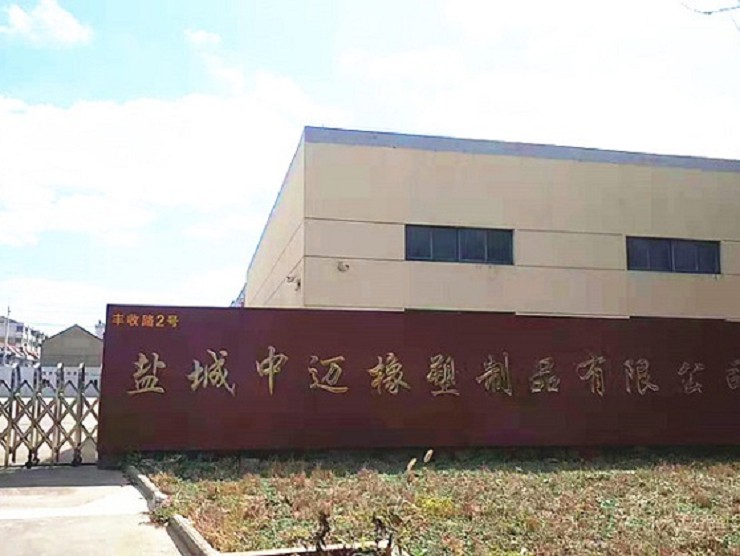
Our Factory
Yancheng Zhongmai Rubber & Plastic Material Co., LTD., is a professional manufacturer for AC/NC foaming agent and WPC processing additives. The company is committed to research & development, production, sales as one.


Our Certificate


FAQ
As one of the leading external lubricant suppliers in China, we warmly welcome you to buy high quality external lubricant at competitive price from our factory. For free sample, contact us now.
PVC Soft Leather Lubricant PE Wax, Lubricant PE Wax for LVT Floor, external lubricant