

Measuring the performance improvement of cables with wire and cable stabilizers is a crucial aspect of the cable manufacturing industry. As a leading supplier of wire and cable stabilizers, we understand the significance of accurately assessing how these stabilizers enhance cable performance. In this blog post, we will explore the various methods and parameters used to measure the performance improvement of cables with the incorporation of our high - quality wire and cable stabilizers.
Understanding the Role of Wire and Cable Stabilizers
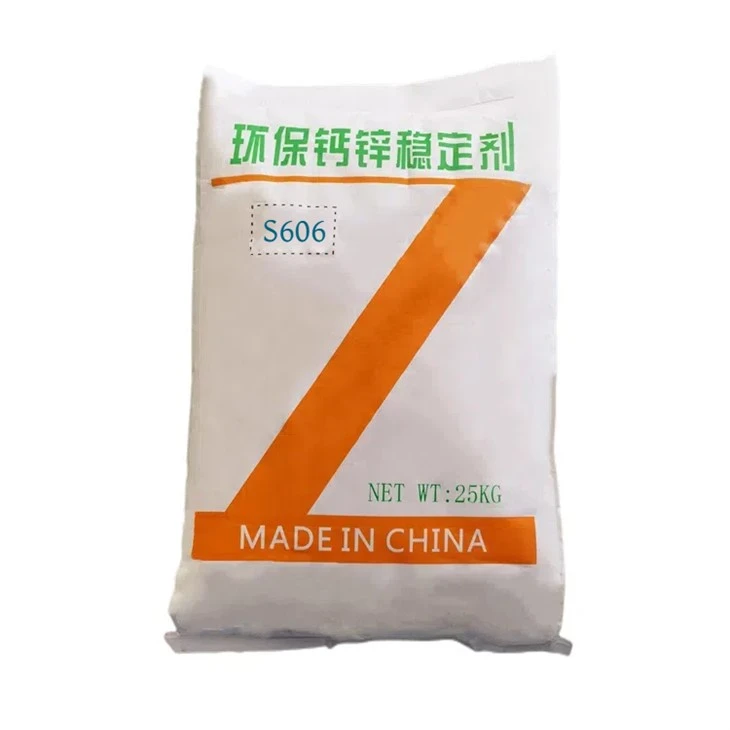
Before delving into the measurement techniques, it is essential to understand what wire and cable stabilizers do. These stabilizers are additives that are mixed with the polymer materials used in cable insulation and sheathing. Their primary functions include preventing thermal degradation, UV degradation, and oxidation of the polymer matrix. By doing so, they extend the service life of the cables, improve their mechanical properties, and enhance their electrical performance.
Key Performance Parameters for Cables
There are several key performance parameters that can be used to evaluate the effectiveness of wire and cable stabilizers. These parameters can be broadly classified into mechanical, electrical, and thermal properties.

Mechanical Properties
- Tensile Strength: Tensile strength is the maximum stress that a cable can withstand while being stretched or pulled before breaking. A cable with a higher tensile strength is more durable and less likely to break during installation or use. To measure the improvement in tensile strength, we can conduct tensile tests on cable samples with and without the stabilizer. Samples are placed in a testing machine, and a gradually increasing force is applied until the sample breaks. The results are then compared to determine the enhancement provided by the stabilizer.
- Elongation at Break: Elongation at break measures how much a cable can stretch before it breaks. A cable with good elongation at break is more flexible and can better withstand bending and twisting during installation. Similar to the tensile strength test, we can measure the elongation at break of cable samples with and without the stabilizer. The increase in elongation at break indicates the improved flexibility imparted by the stabilizer.
Electrical Properties
- Volume Resistivity: Volume resistivity is a measure of a material's ability to resist the flow of electric current. In cables, a high volume resistivity is desirable as it reduces power loss and ensures efficient electrical transmission. We can use a resistivity meter to measure the volume resistivity of cable insulation materials with and without the stabilizer. An increase in volume resistivity after the addition of the stabilizer shows that it helps in improving the electrical insulation performance of the cable.
- Dielectric Constant: The dielectric constant is a measure of the ability of an insulating material to store electrical energy in an electric field. A lower dielectric constant is preferred in cables as it reduces the capacitance and minimizes signal distortion. By measuring the dielectric constant of cable samples with and without the stabilizer, we can assess its impact on the cable's electrical performance.
Thermal Properties
- Thermal Stability: Thermal stability is the ability of a cable to maintain its properties at high temperatures. Cables often operate in environments where they are exposed to heat, and thermal degradation can lead to a decrease in performance and even failure. We can use thermogravimetric analysis (TGA) to measure the thermal stability of cable materials. TGA measures the weight loss of a sample as it is heated at a controlled rate. A cable sample with the stabilizer should show less weight loss at high temperatures, indicating improved thermal stability.
- Heat Aging Resistance: Heat aging resistance is tested by subjecting cable samples to elevated temperatures for a specific period. After the heat - aging process, we can measure the changes in mechanical and electrical properties. A cable with a wire and cable stabilizer should exhibit less degradation in properties compared to a cable without the stabilizer, demonstrating its effectiveness in enhancing heat aging resistance.
Measuring Techniques
To accurately measure the performance improvement of cables with wire and cable stabilizers, we can use a combination of laboratory tests and field trials.
Laboratory Tests
- Sample Preparation: We first need to prepare cable samples with and without the stabilizer under controlled conditions. The samples should be representative of the actual cables that will be produced in large quantities. The stabilizer is added to the polymer matrix during the mixing process, and the samples are then extruded or molded into the appropriate cable shapes.
- Testing Equipment: We use a variety of testing equipment to measure the different performance parameters. For mechanical tests, we use universal testing machines, which can measure tensile strength and elongation at break. For electrical tests, we use resistivity meters, dielectric analyzers, and other electrical measurement devices. Thermal tests are conducted using TGA and heat - aging ovens.
- Data Analysis: After conducting the tests, we collect and analyze the data. We compare the results of the samples with the stabilizer to those without the stabilizer. Statistical methods can be used to determine the significance of the differences in performance parameters. For example, we can calculate the percentage increase or decrease in each parameter and use t - tests to determine if the differences are statistically significant.
Field Trials
- Installation and Monitoring: In addition to laboratory tests, field trials are also essential for measuring the long - term performance improvement of cables with wire and cable stabilizers. We install cables with and without the stabilizer in real - world environments and monitor their performance over time. This can include monitoring electrical parameters such as voltage, current, and power loss, as well as visual inspections for signs of degradation.
- Long - Term Performance Evaluation: Field trials can provide valuable information about the durability and reliability of cables in actual operating conditions. By comparing the performance of cables with and without the stabilizer over a long period, we can determine the long - term benefits of using the stabilizer.
Our Wire and Cable Stabilizers and Their Impact
Our company offers a range of wire and cable stabilizers that are designed to meet the diverse needs of the cable manufacturing industry. Our stabilizers are formulated using advanced technology and high - quality raw materials, ensuring superior performance.
- Enhanced Mechanical Properties: Our stabilizers have been shown to significantly improve the tensile strength and elongation at break of cables. This means that cables with our stabilizers are more durable and flexible, making them easier to install and less prone to damage during use.
- Improved Electrical Performance: By increasing the volume resistivity and reducing the dielectric constant, our stabilizers enhance the electrical insulation performance of cables. This results in more efficient power transmission and less signal distortion, especially in high - frequency applications.
- Excellent Thermal Stability: Our stabilizers provide excellent thermal stability and heat aging resistance. Cables with our stabilizers can operate at higher temperatures without significant degradation, extending their service life and reducing the risk of failure.
In addition to wire and cable stabilizers, we also offer other high - quality products such as SPC Floor Composite Material Additives, Colored PVC Packaging Sheet Stabilizer, and PVC Furniture Partition Stabilizer. These products are also formulated to improve the performance and durability of various PVC - based materials.
Contact Us for Procurement
If you are in the cable manufacturing industry and are looking to improve the performance of your cables, our wire and cable stabilizers are the ideal solution. We are committed to providing high - quality products and excellent customer service. To discuss your specific requirements and to start a procurement process, please feel free to reach out to us. Our team of experts will be happy to assist you in selecting the right stabilizer for your cables and provide you with detailed technical support.
References
- ASTM International. "ASTM Standards for Cable Testing." ASTM International, 2023.
- Groover, M. P. "Fundamentals of Modern Manufacturing: Materials, Processes, and Systems." Wiley, 2010.
- Van Krevelen, D. W. "Properties of Polymers: Their Correlation with Chemical Structure; Their Numerical Estimation and Prediction from Additive Group Contributions." Elsevier, 2012.