

As a supplier of WPC Floor Foaming Agent, I've witnessed firsthand the transformative impact our products have on the wood - plastic composite (WPC) flooring industry. One crucial aspect that we often delve into with our clients is the effect of WPC Floor Foaming Agent on the thermal expansion coefficient of WPC floors.

Understanding the Basics of WPC Floors and Thermal Expansion
WPC floors are a popular choice in the construction and interior design sectors due to their unique blend of the natural aesthetics of wood and the durability of plastics. They are composed of wood fibers or flour and thermoplastics, such as polyethylene (PE), polypropylene (PP), or polyvinyl chloride (PVC). However, like any material, WPC floors are subject to thermal expansion and contraction.
Thermal expansion is the tendency of matter to change in volume in response to a change in temperature. For WPC floors, this can be a significant concern. When the temperature rises, the floor may expand, leading to buckling, warping, or gaps between the floorboards. Conversely, in colder temperatures, the floor may contract, leaving unsightly spaces. A high thermal expansion coefficient means that the material will expand or contract more significantly with temperature changes, which is generally undesirable for flooring applications.
Role of WPC Floor Foaming Agent
WPC Floor Foaming Agents are substances added to the WPC formulation during the manufacturing process. Their primary function is to create a cellular structure within the composite material. When the foaming agent decomposes at a specific temperature, it releases gas, which forms bubbles in the molten polymer - wood mixture. This foaming process has several benefits, including weight reduction, improved insulation, and enhanced mechanical properties.
One of the key ways in which the foaming agent affects the thermal expansion coefficient of WPC floors is through the creation of a porous structure. The gas - filled cells act as a buffer, reducing the overall density of the material and altering its thermal behavior. The presence of these cells can restrict the movement of the polymer chains and wood fibers, thereby reducing the degree of expansion and contraction with temperature changes.
Mechanisms of Reducing Thermal Expansion
Physical Barrier Effect
The foamed cells in the WPC material act as physical barriers to the expansion and contraction of the polymer and wood components. When the temperature increases, the cells absorb some of the energy that would otherwise cause the material to expand. The gas inside the cells can compress slightly, preventing the material from expanding to the same extent as a non - foamed WPC. Similarly, during cooling, the cells can expand slightly to compensate for the contraction of the polymer and wood, reducing the overall shrinkage of the floor.
Altering the Material's Elasticity
The addition of a foaming agent can also change the elasticity of the WPC material. A foamed WPC has a more flexible structure compared to a non - foamed one. This increased flexibility allows the material to better accommodate thermal stress without undergoing significant dimensional changes. The foaming agent modifies the internal structure of the composite, making it more resilient to temperature - induced deformations.
Impact of Different Types of Foaming Agents
There are various types of WPC Floor Foaming Agents available in the market, each with its own characteristics and effects on the thermal expansion coefficient.
Extrusion Foaming Function Masterbatch
Extrusion Foaming Function Masterbatch is a type of foaming agent that is widely used in the extrusion process of WPC floors. This masterbatch contains a combination of chemical foaming agents and other additives. It provides a uniform foaming effect, creating a consistent cellular structure throughout the WPC material. The uniform distribution of cells helps in evenly distributing the thermal stress, resulting in a more stable thermal expansion coefficient. You can learn more about [Extrusion Foaming Function Masterbatch]( /foaming - agent/ac - foaming - agent/extrusion - foaming - function - masterbatch.html).
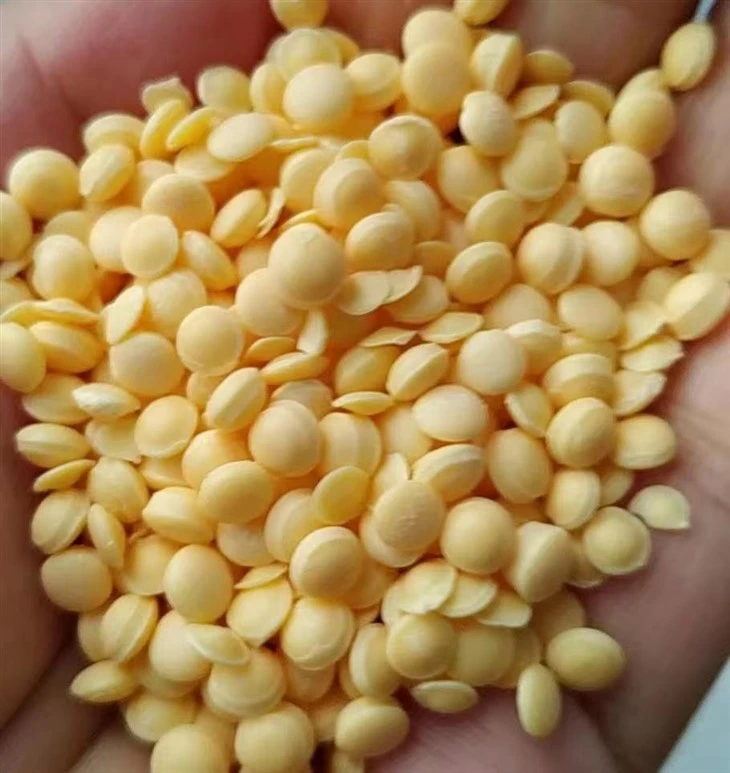
Thermoplastic Elastomer Blowing Agent
Thermoplastic Elastomer Blowing Agent is another option for WPC floor manufacturers. This type of foaming agent is designed to work with thermoplastic elastomers, which can enhance the flexibility and impact resistance of the WPC material. The use of a thermoplastic elastomer blowing agent can lead to a more elastic foamed structure, which is better able to absorb thermal energy and reduce the thermal expansion coefficient. For more details, visit [Thermoplastic Elastomer Blowing Agent]( /foaming - agent/ac - foaming - agent/thermoplastic - elastomer - blowing - agent.html).
PE Beach Chair Granule Foaming Masterbatch
PE Beach Chair Granule Foaming Masterbatch is specifically formulated for applications where high - quality foaming in polyethylene - based WPC materials is required. This masterbatch can create a fine - celled structure in the WPC, which is beneficial for reducing the thermal expansion coefficient. The fine cells provide better insulation and a more stable internal structure, minimizing the effects of temperature changes on the floor's dimensions. Check out [PE Beach Chair Granule Foaming Masterbatch]( /foaming - agent/ac - foaming - agent/pe - beach - chair - granule - foaming - masterbatch.html).
Experimental Evidence
Numerous studies have been conducted to measure the effect of WPC Floor Foaming Agents on the thermal expansion coefficient of WPC floors. In one experiment, researchers compared the thermal expansion of non - foamed WPC samples with foamed samples containing different types of foaming agents. The results showed that the foamed samples had a significantly lower thermal expansion coefficient.
The experiment involved subjecting the samples to a temperature range from - 20°C to 60°C. The non - foamed WPC samples exhibited a large increase in length as the temperature rose, while the foamed samples showed much less expansion. This clearly demonstrates the effectiveness of foaming agents in reducing the thermal expansion of WPC floors.
Considerations for Manufacturers
When using WPC Floor Foaming Agents to control the thermal expansion coefficient, manufacturers need to consider several factors. The amount of foaming agent added is crucial. Too little foaming agent may not create enough cells to effectively reduce the thermal expansion, while too much can lead to a weak and unstable cellular structure.
The processing conditions, such as temperature and pressure, also play a significant role. The decomposition temperature of the foaming agent must be carefully controlled to ensure proper foaming. Additionally, the mixing of the foaming agent with the polymer and wood components should be uniform to achieve a consistent cellular structure throughout the WPC material.
Conclusion
In conclusion, WPC Floor Foaming Agents have a profound effect on the thermal expansion coefficient of WPC floors. By creating a porous structure, these agents can reduce the material's density, alter its elasticity, and act as physical barriers to thermal expansion and contraction. Different types of foaming agents, such as Extrusion Foaming Function Masterbatch, Thermoplastic Elastomer Blowing Agent, and PE Beach Chair Granule Foaming Masterbatch, offer unique benefits in terms of controlling the thermal behavior of WPC floors.
If you are in the WPC flooring manufacturing industry and are looking to improve the thermal stability of your products, our range of WPC Floor Foaming Agents can provide the solution you need. We are committed to providing high - quality foaming agents that can help you produce WPC floors with excellent dimensional stability. Contact us for more information and to discuss your specific requirements. We look forward to partnering with you to create innovative and reliable WPC flooring solutions.
References
- Xiong, X., & Wang, Y. (2019). Effects of foaming agents on the properties of wood - plastic composites. Journal of Wood Science, 65(3), 231 - 239.
- Lee, S. H., & Park, C. B. (2018). Foaming of polymer composites: A review. Progress in Polymer Science, 77, 139 - 176.
- Zhang, J., & Han, X. (2020). Thermal expansion behavior of wood - plastic composites with different foaming agents. Composite Structures, 245, 112327.