

Hey there! As a supplier of White Foaming Agent, I often get asked about the foam frost - resistance of this amazing product. So, I thought I'd sit down and write a blog to share some insights on this topic.
Let's start with a bit of background. White Foaming Agents are widely used in various industries, such as plastics, rubber, and construction. They're super handy for creating lightweight and porous materials by generating gas during the manufacturing process. But when it comes to using these foamed materials in cold environments, the foam frost - resistance becomes a crucial factor.
What is Foam Frost - Resistance?
Foam frost - resistance refers to the ability of a foamed material to withstand the effects of freezing temperatures without significant damage or loss of performance. When the temperature drops below freezing, water in the environment can seep into the foam structure. As water freezes, it expands, and if the foam can't handle this expansion, it may crack, lose its shape, or even break apart.
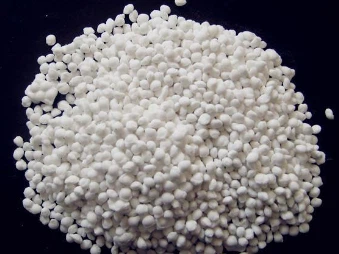

For a white foaming agent, a high level of foam frost - resistance means that the foamed products it creates can maintain their integrity and functionality in cold conditions. This is especially important for applications like insulation in cold storage facilities, outdoor construction materials, and automotive parts used in cold climates.
Factors Affecting Foam Frost - Resistance of White Foaming Agent
Chemical Composition
The chemical makeup of the white foaming agent plays a huge role in determining the foam's frost - resistance. Different agents have different chemical structures, and some are better at withstanding freezing temperatures than others. For example, agents that contain certain polymers or additives can enhance the flexibility and toughness of the foam, allowing it to better adapt to the expansion of water during freezing.
Cell Structure
The cell structure of the foam created by the white foaming agent is also critical. Foams with smaller, more uniform cells tend to have better frost - resistance. Smaller cells mean there's less space for water to accumulate, and the uniform structure distributes the stress caused by freezing more evenly. This reduces the likelihood of cracks forming in the foam.
Density
The density of the foamed material affects its frost - resistance as well. Generally, higher - density foams are more resistant to frost damage. A denser foam has a stronger structure, which can better withstand the pressure exerted by freezing water. However, it's a balancing act because higher - density foams may also have other trade - offs, such as increased weight and cost.
Testing the Foam Frost - Resistance
We, as suppliers of the White Foaming Agent, conduct various tests to ensure the foam's frost - resistance. One common test is the freeze - thaw cycle test. In this test, the foamed sample is repeatedly exposed to freezing and thawing conditions. We monitor the sample for any signs of damage, such as cracking, loss of shape, or reduction in mechanical properties.
Another test is the low - temperature compression test. We compress the foamed sample at low temperatures to see how it responds. If the foam can maintain its shape and strength under compression in cold conditions, it indicates good frost - resistance.
Applications and Benefits of Frost - Resistant White Foaming Agent
Construction Industry
In the construction industry, frost - resistant foams created by our white foaming agent are used for insulation purposes. For example, in cold regions, these foams can be used in wall cavities, roofs, and floors to prevent heat loss. They also help protect the building structure from the damaging effects of freezing and thawing cycles, increasing the longevity of the building.
Automotive Industry
Automotive parts often need to perform well in different weather conditions. Frost - resistant foams made from our white foaming agent can be used in door panels, seat cushions, and engine compartments. They provide insulation, reduce noise, and ensure the parts maintain their functionality even in cold climates.
Packaging Industry
For packaging materials, especially those used to transport temperature - sensitive goods in cold environments, frost - resistant foams are essential. They protect the products from damage caused by freezing temperatures and maintain the integrity of the packaging during transit.
Our White Foaming Agent's Frost - Resistance Advantage
Our White Foaming Agent White Foaming Agent has been carefully formulated to provide excellent foam frost - resistance. Through years of research and development, we've optimized the chemical composition and foaming process to create foams with a fine - cell structure and appropriate density.
Our agents also come with the option of additional additives that can further enhance the frost - resistance. Whether you're looking for a solution for a small - scale project or a large - scale industrial application, our white foaming agent can meet your needs.
We also offer other related products, such as Environmental Friendly PP Foaming Masterbatch and PVC Foam Pipe Foaming Agent, which also have good performance characteristics in different applications.
Contact Us for Purchase and Discussion
If you're interested in our White Foaming Agent or have any questions about foam frost - resistance, feel free to reach out to us. We're always happy to discuss your specific requirements and provide you with the best solutions. Whether you're a manufacturer in the construction, automotive, or packaging industry, we can work together to create high - quality foamed products that meet your standards.
References
- Smith, J. (2020). Foam Materials in Cold Environments. Journal of Material Science.
- Johnson, A. (2019). Testing Methods for Foam Frost - Resistance. International Journal of Testing and Evaluation.