

Hey there! As a supplier of WPC (Wood - Plastic Composite) Blowing Agent, I often get asked about the particle size of these agents. It's a pretty important topic, so I thought I'd share some insights with you all.
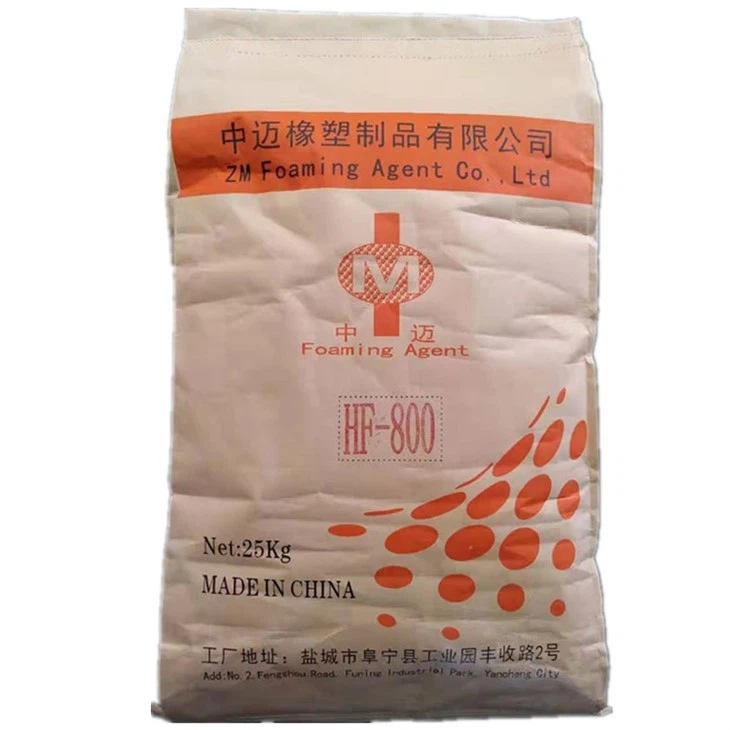
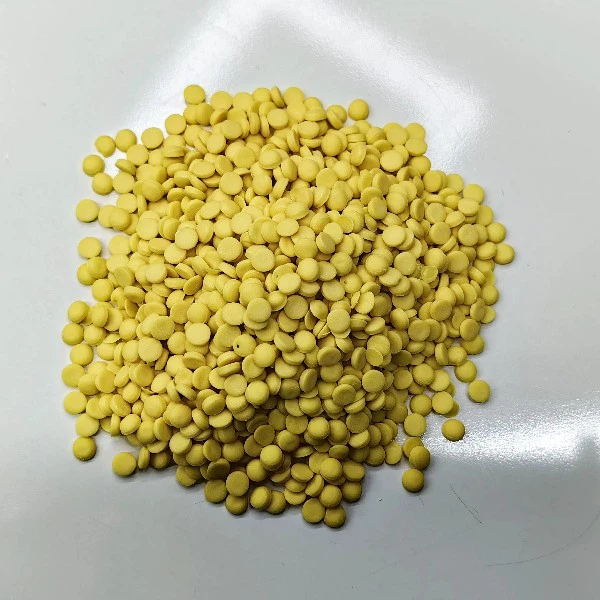
First off, let's talk about what a blowing agent is. A blowing agent is a substance that's used to create foam in materials. In the case of WPC, it helps to make the composite lighter, more insulating, and gives it a better appearance. Now, the particle size of the WPC blowing agent plays a crucial role in how well it works.
When it comes to particle size, there's no one - size - fits - all answer. Different applications require different particle sizes. For instance, if you're using the blowing agent for a fine - textured WPC product, you'll need a smaller particle size. Smaller particles tend to disperse more evenly in the composite, which can lead to a more uniform foam structure. This is great for products where a smooth and consistent surface finish is important, like some high - end furniture pieces made from WPC.
On the other hand, larger particle sizes can be beneficial in certain situations. If you're making a WPC product that doesn't require such a fine finish, like some outdoor decking or industrial components, larger particles might do the trick. Larger particles can create bigger bubbles in the foam, which can make the product more lightweight in a cost - effective way.
Let's look at the impact of particle size on the foaming process. When the particle size is too large, it can cause some problems. The larger particles might not disperse well in the WPC matrix. This can result in uneven foaming, with some areas having large bubbles and others having very few or none at all. It can also lead to a weaker structure in the final product because the foam isn't distributed evenly.
Conversely, if the particle size is too small, it can be a challenge to handle. Small particles are more likely to clump together, which can make it difficult to mix them properly with the WPC materials. And if they're not mixed well, the foaming process won't be as efficient.
Now, I want to mention some of the different types of WPC blowing agents we offer. We have the Excellent Elastic Leather Foaming Agent. This one is great for applications where you need a high - quality, elastic foam. The particle size of this agent is carefully controlled to ensure optimal performance. It's designed to disperse well in the leather - like WPC materials, creating a smooth and elastic foam.
Another product is the PVC Solid Wall Board Foaming Agent. For PVC solid wall boards, the right particle size is crucial to achieve the desired density and strength. Our agent is formulated with a particle size that allows for even foaming throughout the board, resulting in a strong and durable product.
We also have the PP Pipe Particle Blowing Agent. This blowing agent is tailored for PP pipes. The particle size is optimized to create a foam structure that provides good insulation and reduces the weight of the pipes without sacrificing their structural integrity.
When it comes to determining the ideal particle size for your specific WPC application, there are a few factors to consider. The type of WPC material you're using is important. Different plastics and wood fibers have different properties, and they might interact differently with the blowing agent depending on its particle size.
The processing conditions also matter. If you're using a high - speed extrusion process, for example, the particle size needs to be such that it can be easily incorporated into the molten WPC. A particle size that's too large might cause blockages or uneven flow in the extrusion equipment.
The end - use requirements of the WPC product are also a key consideration. If the product is going to be exposed to harsh environmental conditions, like extreme temperatures or moisture, the particle size of the blowing agent can affect how well the product performs over time.
We understand that choosing the right WPC blowing agent with the appropriate particle size can be a bit confusing. That's why our team of experts is always here to help. We can analyze your specific needs, take into account all the factors I've mentioned, and recommend the best blowing agent for your project.
Whether you're a small - scale manufacturer looking to create a unique WPC product or a large - scale industrial producer, we've got the right solution for you. Our blowing agents are of the highest quality, and we're committed to providing excellent customer service.
If you're interested in learning more about our WPC blowing agents or have any questions about particle size, don't hesitate to reach out. We're more than happy to have a chat and discuss how we can help you achieve the best results with your WPC products. Contact us today to start the conversation about your WPC blowing agent needs.
References
- Textbooks on polymer processing and foaming technology
- Industry research papers on WPC materials and blowing agents