

Hey there! As a supplier of white foaming agents, I've been getting a lot of questions lately about how these agents affect the transparency of products. So, I thought I'd take a deep - dive into this topic and share some insights with you all.
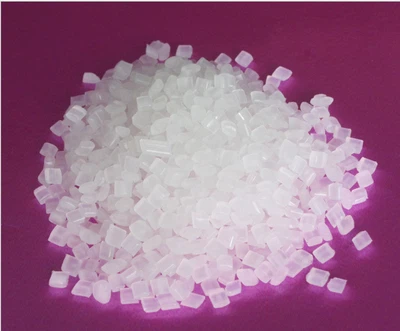
First off, let's understand what white foaming agents are. White foaming agents are substances that are used to create foam in various products. They work by releasing gas when they're heated or undergo a chemical reaction, which then forms bubbles in the material. These agents are widely used in industries like plastics, rubber, and even in some food products.
Now, onto the main question: how do they impact product transparency? Well, it's a bit of a complex issue, and there are several factors at play.
Particle Size and Dispersion
One of the most significant factors is the particle size of the white foaming agent. When the particles are large, they tend to scatter light. You know how a foggy window looks blurry? It's a similar concept. Large particles in the product act like tiny obstacles to light, causing it to scatter in different directions. This scattering reduces the amount of light that can pass through the product in a straight line, making it look less transparent.
For example, in plastic products, if the white foaming agent particles aren't well - dispersed, they can clump together. These clumps are essentially larger masses that scatter light even more effectively. On the other hand, when the particles are small and evenly dispersed, they have less of an impact on light transmission. The light can pass through the product more easily, resulting in better transparency.
As a supplier, we work hard to ensure that our white foaming agents have a consistent and small particle size. This helps our customers achieve the best possible transparency in their products.
Chemical Composition
The chemical composition of the white foaming agent also matters a great deal. Some foaming agents contain elements or compounds that can absorb light. When light is absorbed, it doesn't pass through the product, and this reduces transparency.
For instance, certain additives in the foaming agent might have a natural color or absorb specific wavelengths of light. If you're aiming for a clear, transparent product, these light - absorbing components can be a real problem. At our company, we've developed foaming agents with a chemical composition that minimizes light absorption. We use advanced chemical engineering techniques to formulate agents that are as "invisible" to light as possible.
Interaction with the Base Material
How the white foaming agent interacts with the base material of the product is another crucial aspect. In some cases, the foaming agent can react with the base material in a way that changes its optical properties.
Let's take PVC products as an example. When using a PVC Foam Pipe Foaming Agent, if the agent doesn't mix well with the PVC resin, it can cause cloudiness or haziness. This is because the reaction between the two might create small inhomogeneities in the material structure. These inhomogeneities scatter light, just like large particles do.
We've spent a lot of time researching and testing different combinations of foaming agents and base materials. Our goal is to find the perfect match so that the foaming agent enhances the foam - forming process without sacrificing transparency.

Foam Structure
The structure of the foam created by the white foaming agent can also affect transparency. A well - structured foam with uniform bubble size and distribution is more likely to allow light to pass through. When the bubbles are all about the same size and evenly spaced, they don't scatter light as much.
On the other hand, if the foam has large, irregular bubbles or if the bubbles are clustered together, light scattering increases. This is similar to how a bunch of randomly placed rocks in a clear stream would disrupt the flow of water. In the case of a product, the disrupted light flow means reduced transparency.
We offer Foaming Agent For Polypropylene Product that are designed to create a fine - celled, uniform foam structure. This helps our customers get products with better transparency.
Application in Different Industries
Let's look at how these factors play out in different industries.
Plastic Industry
In the plastic industry, transparency is often a key selling point. Products like clear plastic containers, optical lenses, and display screens need to be as transparent as possible. Our white foaming agents are formulated to meet these high - transparency requirements.
For example, in the production of polypropylene products, our Environmental Friendly PP Foaming Masterbatch helps create a lightweight yet transparent foam. The small particle size and even dispersion of the agent ensure that the polypropylene retains its clarity while still having the benefits of foam, like reduced weight and improved insulation.
Rubber Industry
In the rubber industry, transparency can also be important, especially for products like rubber gaskets or seals that need to be visually inspected. The white foaming agents we supply are carefully selected to work well with rubber compounds. They don't cause any discoloration or reduce the transparency of the rubber. Instead, they create a stable foam structure that enhances the product's performance without sacrificing its optical properties.
Tips for Achieving Better Transparency
If you're using our white foaming agents and want to achieve the best transparency in your products, here are some tips:
- Proper Mixing: Make sure to mix the foaming agent thoroughly with the base material. Use high - quality mixing equipment to ensure even dispersion of the particles.
- Optimal Processing Conditions: Follow the recommended processing temperature, pressure, and time. Incorrect processing conditions can lead to uneven foam formation and reduced transparency.
- Quality Control: Regularly test the transparency of your products during the production process. This allows you to make adjustments if needed.
Conclusion
In conclusion, white foaming agents can have a significant impact on the transparency of products. But with the right choice of foaming agent, proper processing, and quality control, it's possible to achieve excellent transparency while still enjoying the benefits of foam.
As a supplier, we're committed to providing high - quality white foaming agents that meet your transparency requirements. Whether you're in the plastic, rubber, or any other industry, we have the solutions for you.
If you're interested in learning more about our white foaming agents or want to discuss your specific needs, don't hesitate to reach out. We're always happy to have a chat and help you find the perfect product for your applications. Let's work together to create high - quality, transparent products!
References
- "Foam Technology and Applications" by Norman H. Azar
- "Plastics Engineering Handbook" by Edward M. Patton
- Industry research reports on foaming agents and product transparency