

Hey there! I'm a supplier of WPC Floor Foaming Agent, and today I wanna dig deep into a super interesting topic: Is WPC Floor Foaming Agent affected by different wood - plastic ratios in WPC?
First off, let's quickly go over what WPC is. WPC stands for Wood - Plastic Composite. It's a material that combines wood fibers or flour with thermoplastics. This blend gives it some unique properties, making it a popular choice for flooring and other applications. And that's where our foaming agent comes in. The foaming agent is used to create a cellular structure in the WPC, which can improve its insulation, reduce its weight, and enhance its mechanical properties.
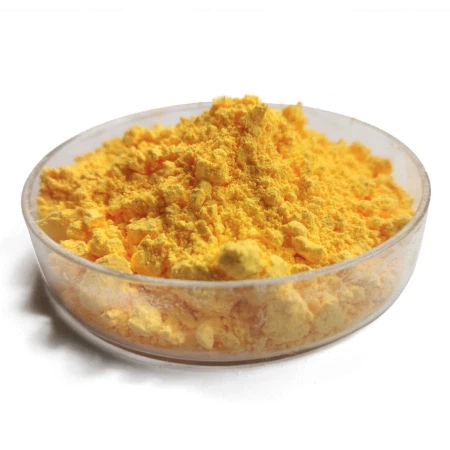

Now, onto the main question: Does the wood - plastic ratio matter for the foaming agent? Well, you bet it does!
The Impact of High Wood Ratios
When the wood content in the WPC is high, say more than 60%, several things happen. Wood is a natural material with a lot of hydroxyl groups on its surface. These groups are hydrophilic, which means they love water. When we add the foaming agent to a high - wood - content WPC, the water absorbed by the wood can have a significant impact on the foaming process.
The foaming agent works by decomposing at a certain temperature to release gas, which forms bubbles in the WPC. But if there's too much water in the system due to the high wood content, it can interfere with the decomposition of the foaming agent. The water might evaporate during the heating process, causing uneven foaming. The bubbles might be too big or too small, and the overall foaming structure could be inconsistent.
For example, in some of our tests, we found that when the wood ratio was around 70%, the foaming agent didn't perform as well as we'd hoped. The foam cells were larger and less uniform compared to when the wood ratio was lower. This could lead to a WPC floor with reduced mechanical strength and a less appealing surface finish.
The Impact of High Plastic Ratios
On the flip side, when the plastic ratio in the WPC is high, like more than 70%, the situation is a bit different. Plastics are generally more hydrophobic than wood. They have better flow properties at high temperatures, which can be both good and bad for the foaming agent.
The good news is that the consistent flow of the plastic matrix can help the foaming agent distribute more evenly. The gas released by the foaming agent can form more uniform bubbles because the plastic provides a more stable environment. However, plastics also have different thermal properties compared to wood. Some plastics have a high melting point, and if the foaming agent decomposes at a temperature lower than the plastic's melting point, the foaming process might not be as effective.
We've seen in our experiments that with a high - plastic - content WPC, if the foaming agent isn't carefully selected, it might start decomposing too early or too late. For instance, if it decomposes too early, the gas might escape before the plastic has fully melted, resulting in a low - density foam. If it decomposes too late, the plastic might start to degrade before the foaming is complete.
Finding the Sweet Spot
So, what's the ideal wood - plastic ratio for our WPC Floor Foaming Agent? Well, it's a bit of a balancing act. A ratio of around 50:50 seems to be a sweet spot in many cases. At this ratio, the wood and plastic complement each other. The wood provides some of its natural strength and aesthetic appeal, while the plastic offers good flow and stability during the foaming process.
When the wood - plastic ratio is around 50:50, the foaming agent can work more efficiently. The gas released by the foaming agent can form a more uniform and fine - celled foam structure. This results in a WPC floor that has good mechanical properties, such as high strength and impact resistance, as well as a nice surface finish.
Different Types of Foaming Agents for Different Ratios
It's also important to note that different types of foaming agents might be more suitable for different wood - plastic ratios. For example, if you're dealing with a high - wood - content WPC, you might want to consider a foaming agent that is more resistant to the effects of water. Some of our AC Foaming Agent For Snow Board products have been designed to perform well in such conditions. They can better tolerate the moisture in the wood and still produce a decent foaming effect.
On the other hand, for high - plastic - content WPCs, a High Temperature Foaming Agent For PVC might be a better choice. These agents can decompose at higher temperatures, which are often required to melt high - melting - point plastics.
And if you're working on WPC for PVC window applications, our PVC Window Foam Agent can be a great option. It's formulated to work well with the specific wood - plastic ratios and processing conditions commonly used in PVC window production.
Conclusion and Call to Action
In conclusion, the wood - plastic ratio in WPC has a significant impact on the performance of the WPC Floor Foaming Agent. Whether it's a high - wood or high - plastic ratio, there are challenges and opportunities. By understanding these relationships, we can select the right foaming agent and optimize the WPC production process to get the best results.
If you're in the business of producing WPC floors or other WPC products, and you're looking for a reliable foaming agent, we'd love to talk to you. We have a wide range of foaming agents that can be tailored to different wood - plastic ratios. Just reach out to us, and we can have a detailed discussion about your specific needs. Let's work together to create high - quality WPC products!
References
- "Wood - Plastic Composites: Materials and Processing", by X. Cai, Y. Yu, and J. Li.
- "Foaming Agents in Polymer Processing", by M. Xanthos.