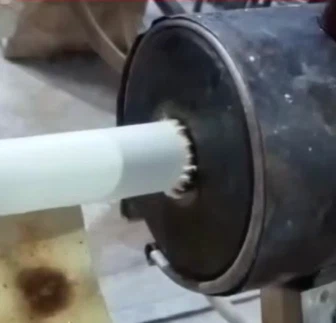
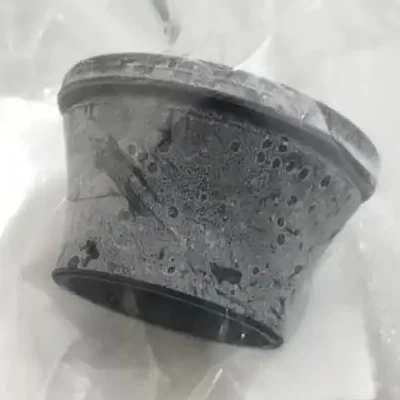
During the processing and production of PVC products, some customers occasionally raise some questions: Why does the surface of the PVC products I produce drip water? Why is it that even though I have used dehumidifiers in the raw materials, there is still "water seeping out" on the surface of my products? During the processing or use of PVC resin and recycled materials (recycled materials), a "dripping" phenomenon may occur on the surface of the products. This phenomenon is also known as the precipitation phenomenon, condensation phenomenon or the wetting phenomenon of the product surface. Below, we will analyze the possible causes that may lead to these situations!
·Problems with the PVC resin itself
①Residual low-molecular-weight substances
Unreacted monomers (VCM), oligomers or plasticizers remaining in the production process of PVC resin will migrate to the surface of the product during high-temperature processing or long-term use, forming oily precipitates (similar to water droplets).
How to solve it: Select high-purity PVC resin (such as suspension resin, with residual VCM < 1ppm)
②Insufficient thermal stability
PVC is prone to decomposition during processing, generating HCL gas. If insufficient heat stabilizers (such as common lead salt stabilizers or calcium-zinc stabilizers) are added, the decomposition products can easily combine with water to form acidic droplets.
How to solve it: Appropriately increase the dosage of the heat stabilizer or compound a more efficient stabilizer.
·The inherent defects of recycled materials
①Impurities and degradation products
The recycled materials contain waste additives (such as aged plasticizers), fillers (calcium carbonate), or contaminants (oil stains, dust, etc.), which are prone to leach out during secondary processing.
How to solve it: Strictly clean the recycled materials and add adsorbents (such as activated carbon) to remove impurities.
②Molecular chain breakage
Multiple processing leads to the degradation of PVC molecular chains, generating more low-molecular-weight substances and accelerating the migration rate.
How to solve it: Limit the proportion of recycled materials added and supplement toughening agents (such as CPE) at the same time.
·Formula and process factors
①Excessive plasticizer or migration
Phthalate plasticizers (such as DOP) are prone to exudation, especially in high-temperature and high-humidity environments, where the surface shows a "sweating" phenomenon.
How to solve it: Switch to high-molecular-weight plasticizers or polyester-based plasticizers.
②Lubricant imbalance
Excessive external lubricants (such as PE wax) will precipitate, forming white powder or oil droplets.
How to solve it: Optimize the lubrication system (the ratio of internal and external lubrication), such as compounding oxidized polyethylene wax (OPE wax).
③The processing temperature is too high
When the temperature exceeds 190℃, the decomposition of PVC intensifies, and the volatile substances condense and adhere to the surface.
How to solve it: Control the extrusion/injection molding temperature (160-180℃), and use low-temperature foaming agents (such as NC foaming agents).

·Environmental factors
①The influence of humidity
PVC products absorb moisture in a humid environment, and additives (such as CaCO3) may seep out water after absorbing moisture.
How to solve it: Add desiccant or surface coating treatment.
②Temperature difference condensation
When products are exposed to alternating cold and hot environments (such as refrigerated packaging), the condensation water on the surface is mistakenly regarded as a "dripping" phenomenon.
How to solve it: Improve the air permeability of the packaging or use an anti-condensation formula.


By systematically inspecting PVC resin, recycled materials, formulas and environmental factors, the "dripping" phenomenon of PVC products can be effectively reduced.