

What is the function of PVC processing aid?
As a PVC processing aid supplier, I've witnessed firsthand the transformative role these aids play in the PVC manufacturing process. PVC, or polyvinyl chloride, is one of the most widely used plastics globally, renowned for its versatility, durability, and cost - effectiveness. However, to fully unlock its potential and ensure high - quality end products, PVC processing aids are indispensable.
Improving Processability
One of the primary functions of PVC processing aids is to enhance the processability of PVC resin. PVC has a relatively high melting viscosity and poor flow properties. During the processing, such as extrusion, injection molding, or calendering, it can be challenging to shape the PVC into the desired forms. Processing aids act as lubricants and flow modifiers, reducing the friction between PVC molecules and the processing equipment.
For instance, when extruding PVC pipes, the addition of processing aids allows the molten PVC to flow smoothly through the die. This results in a more uniform wall thickness of the pipes and a smoother surface finish. Without these aids, the PVC might stick to the extrusion equipment, leading to uneven flow, surface defects, and even equipment damage. In injection molding of PVC products like electrical enclosures, processing aids enable the molten PVC to fill the mold cavities completely, ensuring that all the intricate details of the mold are accurately replicated in the final product.
Enhancing Mechanical Properties
PVC processing aids also contribute significantly to improving the mechanical properties of PVC products. They can enhance the impact strength, tensile strength, and elongation at break of PVC. This is crucial as many PVC applications require products to withstand various mechanical stresses in their end - use environments.
Impact modifiers, a type of PVC processing aid, are added to PVC to improve its resistance to impact. For example, in the production of PVC window profiles, which need to withstand harsh weather conditions and possible impacts from flying objects, impact modifiers ensure that the profiles do not crack or break easily. By increasing the toughness of PVC, these aids extend the service life of the products and enhance their reliability.
Tensile strength is another important mechanical property. Processing aids can help align the PVC molecules during processing, resulting in a more ordered structure. This ordered structure leads to an increase in the tensile strength of the PVC products, allowing them to bear higher loads without deformation or failure. In the case of PVC pipes used for water supply or drainage systems, high tensile strength is essential to prevent pipe breakage under pressure.
Promoting Homogeneous Mixing
In the PVC compounding process, it is necessary to mix various additives, such as stabilizers, pigments, and fillers, with the PVC resin uniformly. PVC processing aids facilitate this homogeneous mixing. They act as dispersants, ensuring that all the additives are evenly distributed throughout the PVC matrix.
For example, when adding pigments to PVC to produce colored products, processing aids prevent the pigments from agglomerating. Agglomerated pigments can cause color inconsistencies in the final product, with some areas appearing darker or lighter than others. By promoting uniform dispersion, processing aids ensure that the PVC products have a consistent color throughout. Similarly, in the case of fillers like calcium carbonate, which are added to reduce costs and improve certain properties, processing aids help in their proper dispersion, ensuring that the fillers do not form clumps that could weaken the mechanical properties of the PVC products.
Thermal Stability
PVC is sensitive to heat during processing. At high processing temperatures, PVC can undergo thermal degradation, which leads to discoloration, loss of mechanical properties, and the release of harmful substances such as hydrogen chloride gas. PVC processing aids, especially heat stabilizers, play a vital role in preventing thermal degradation.
Heat stabilizers react with the unstable chlorine atoms in PVC, preventing the formation of double bonds and the subsequent degradation reactions. For example, PVC WPC Door Stabilizer is specifically designed to provide excellent thermal stability for PVC used in the production of wood - plastic composite (WPC) doors. It ensures that the PVC maintains its integrity during the high - temperature processing required for WPC door manufacturing, resulting in high - quality, long - lasting doors. Another example is the SPC Stabilizer With Customized Whiteness, which not only provides thermal stability but also allows for the customization of the whiteness of the SPC (stone - plastic composite) products, meeting the aesthetic requirements of different applications.
Lubrication and Molding Release
Lubricants are an important type of PVC processing aid. They can be divided into internal lubricants and external lubricants. Internal lubricants reduce the friction between PVC molecules, improving the flow of the molten PVC. External lubricants, on the other hand, reduce the friction between the PVC and the processing equipment, such as the mold surface.
In the production of PVC door panels, Balance Lubricant for PVC Door Panel is used to achieve the right balance of internal and external lubrication. This ensures that the PVC can flow smoothly during the molding process and can be easily released from the mold after cooling. Without proper lubrication, the PVC door panels might have surface defects due to sticking to the mold, and the demolding process could be difficult, leading to damage to the panels.
Cost - effectiveness
From a cost - effectiveness perspective, PVC processing aids can actually help reduce overall production costs. By improving processability, they increase the production efficiency. For example, faster extrusion or injection molding cycles can be achieved, leading to higher production volumes per unit time. This reduces the labor and energy costs associated with production.
Moreover, by enhancing the mechanical properties and durability of PVC products, the need for frequent replacements is reduced. This is beneficial for both manufacturers and end - users. Manufacturers can build a better reputation for producing high - quality products, while end - users save money in the long run by not having to purchase new products as often.

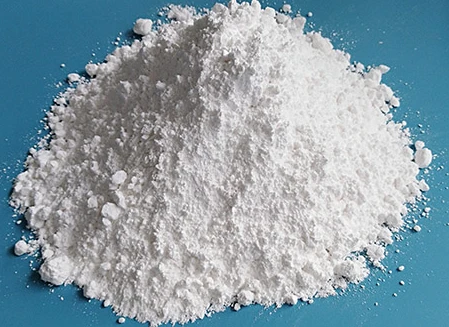
In conclusion, PVC processing aids are essential components in the PVC manufacturing process. They perform a wide range of functions, from improving processability and mechanical properties to ensuring thermal stability and cost - effectiveness. As a PVC processing aid supplier, we are committed to providing high - quality products that meet the diverse needs of our customers. If you are involved in the PVC manufacturing industry and are looking for reliable PVC processing aids, we invite you to contact us for a detailed discussion on your specific requirements and to explore how our products can optimize your production process and enhance the quality of your PVC products.
References
- “Handbook of PVC Formulating” by Edward J. Wickson.
- “Polyvinyl Chloride (PVC) Technology” by W. V. Titow.